Appearance at the Standing Committee on Public Accounts (PACP) - 2025 Report of the Office of the Auditor General of Canada: Follow-up on Programs for First Nations - April 27, 2026
Table of contents
- Scenario Note
- Opening Remarks
- OAG Follow-up on Programs for First Nations
- Management Response Action Plans (MRAP)
- 2025 OAG Follow-up Report – Summary of Results
- Data Pack
- Audit of Access to Health Services for Remote First Nations Communities
- Audit of Health Resources for Indigenous Communities
- Audit of Oral Health Programs for First Nations and Inuit
- Audit of Emergency Management in First Nations Communities
- Audit of Socio-Economic Gaps for First Nations Reserves
- Audit of Access to Safe Drinking Water in First Nations Communities
- 2025 Report of the Auditor General of Canada – Follow-up Report on Programs for First Nations
- ISC Operating Expenses per Main Estimates QP Card
- ISC Role in OAG Report on Canada-Wide Early Learning and Child Care System
- OAG Report on Registration
- PACP Member Biographies
1. Scenario Note
Logistics
Date: April 27, 2026
Time: 11:00 am – 12:45 pm
Location: Room 415, Wellington Building 197 Sparks st.
Appearing
Indigenous Services Canada
- Michelle Kovacevic, Deputy Minister
- Candice St-Aubin, Senior Assistant Deputy Minister
- Richard Goodyear, Chief Financial Officer
- Jennifer Wheatley, Assistant Deputy Minister
- Curtis Bergeron, Director
Office of the Auditor General of Canada
- Karen Hogan, Auditor General of Canada
- Glenn Wheeler, Principal
Committee Membership
- MP Jean Yip (LIB – ON) (Vice-Chair)
- MP Anthony Housefather (LIB – QC)
- MP Tom Osborne (LIB – NFLD)
- MP Kristina Tesser Derksen (LIB – ON)
- MP John Williamson (CPC – NB) (Chair)
- MP Gérard Deltell (CPC – QC)
- MP Ned Kuruc (CPC – ON)
- MP Stephanie Kusie (CPC – AB)
- MP Sébastien Lemire (BQ – QC) (Vice-Chair)
Parliamentary Analysis
- MP Jean Yip (Lib) (Vice-Chair) is likely to ask what progress has been made, and what progress will be made moving forward to address the short coming found by the OAG.
- MP Anthony Housefather (Lib) may ask questions regarding the government's work on emergency management, specifically pertaining to wildfire evacuations. He may also ask questions regarding First Nations' access to health care and resources, specifically raising questions around the funding and importance of Jordan's Principle.
- MP Tom Osborne (Lib) may raise questions regarding First Nations education, specifically questions regarding early learning and child care. He raised these questions during the October 21, 2025 meeting on the Fall Reports.
- MP Kristina Tesser Derksen (Lib) raised questions around nursing stations during the meeting on this topic held on October 21, 2025. She specifically asked about the OAG's findings regarding "lack of sustained management attention", and how that is a core problem in broader progress on implementing recommendations.
- MP John Williamson (CPC) (Chair) may use some time to ask questions around accountability for a perceived lack of progress on implementing the OAG's recommendations. He may ask who will be held responsible, and what changes within the department are being made to address these perceived failures.
- MP Gérard Deltell (CPC – QC) often asks questions at other committees regarding the connection between Indigenous communities and energy projects. He may connect resource project approvals to improving socio-economic gaps and outcomes for Indigenous communities and question why more isn't being done on that front.
- MP Ned Kuruc (CPC – ON) is likely to ask questions around seeking accountability for perceived overspending and lack of results. He has criticized several departments regarding OAG reports on the basis that "the common thread in all of them is that we have too much bureaucracy and government overspending and not enough accountability".
- MP Stephanie Kusie (CPC – AB) may raise questions pertaining to emergency management, specifically regarding emergency management agreements in Alberta. This line of questioning was raised by CPC MP Laila Goodridge, who was substituting in on the committee during the October 21, 2025 meeting with the OAG on this topic.
- MP Sébastien Lemire (BQ) (Vice-Chair) is also the BQ critic for Crown-Indigenous Relations and Northern Affairs. During the October 21, 2025 meeting with OAG on this topic he asked about capacity building for First Nations in service delivery such as housing. During the December 10, 2025 INAN meeting on this topic, he asked about the determination of total funding required to operate and maintain water infrastructure.
The CPC might substitute one of their INAN members for this meeting:
- MP Jaime Schmale (CPC) (Vice-Chair) is also the CPC Shadow Minister for Crown-Indigenous Relations. He is likely to ask questions pertaining to accountability for the department not fully implementing recommendations made by the OAG. During the December 10, 2025 INAN meeting on this subject, he asked what was causing the lack of progress in achieving OAG recommendations, given employees within the department had grown significantly.
- MP Eric Melillo (CPC) is the CPC Shadow Minister for Federal Economic Development Agency for Northern Ontario. May question how the increase in departmental budget hasn't resulted in satisfactory progress in addressing the OAG's recommendations. During the recent INAN appearance of the Minister and officials on Budget 2025, he focused on the overall figures of the report, noting that 53% of the time, the department had made unsatisfactory progress in implementing actions needed, and asked a similar question during the December 10, 2025 OAG Report meeting.
- MP Bob Zimmer (CPC) is the CPC Shadow Minister for Arctic Affairs & Canadian Northern Economic Development Agency. Is likely to focus his questions on the North. May also ask broader questions regarding accountability within the department for not making enough progress on OAG recommendations. May ask specific questions regarding the Access to Health Services for Remote First Nations Communities and Access to Safe Drinking Water reports.
- MP Billy Morin (CPC) is the CPC Shadow Minister for Indigenous Services and he was formerly a Chief of the Enoch Cree Nation (2015–2022). During the December 10, 2025 INAN meeting on this subject, he asked about upcoming water legislation and the role that free, prior, informed consent would have in moving forward on that legislation.
Recent PACP studies, reports and government responses
- 2025 Fall Reports of the Auditor General of Canada
- Report 2, Connectivity in Rural and Remote Areas
- Report 1, Forests and Climate Change
- Follow-up Study on Report 3, Gender-Based Analysis Plus
- Report 6, Arctic Waters Surveillance
- Report on the Canada-Wide Early Learning and Child Care System
Recent Correspondence
- MP Williamson – Parliamentary Support Letter for Jordan's Principle Request Concerning Specialized Care for Matthew Smith (MIN-A31919)
- MP Melillo – tragic fire in Cat Lake First Nation that destroyed their nursing station (MIN-A28370)
- MP Zimmer – Background RCMP files (MIN-A32101)
- MP Melillo – Support for Koocheching's Recognition as a First Nations Band under the Indian Act (MIN-A32077)
Members OPQs/Petitions
Q-573 — November 17, 2025 — Billy Morin (Edmonton Northwest) — With regard to the government's response to "2021 Canadian Human Rights Tribunal 41: Order": (a) what are the details of all CHRT 41 projects developed or submitted since 2021, including their status (in development with Indigenous Services Canada, submitted, triaged, assessed, approved for feasibility, under revision, approved for construction, under construction, substantially complete, fully complete), broken down by fiscal year and region; (b) what are the service standards for CHRT 41 capital decisions at each stage; (c) how often were the service standards met; (d) what prioritization model is used to rank CHRT 41 projects; (e) what were the administrative costs to run CHRT 41 (broken down by headquarters and regions) and the capital outlay, broken down by fiscal year; (f) of approved projects, how many serve people ( roman numeral 1) on-reserve, ( roman numeral 2) off-reserve, ( roman numeral 3) both on- and off-reserve; (g) of the approved projects, how many are single-purpose First Nations child and family services, or for the delivery of services under Jordan's Principle projects, and how many are for multi-use facilities that include other services; (h) how many approved CHRT 41 requests included vehicles or mobile units (for example outreach vans), and what were the average approved cost per unit and delivery times; (i) what is the government's current definition of ( roman numeral 1) ready to proceed, ( roman numeral 2) feasibility study, ( roman numeral 3) substantial completion, used for CHRT 41; (j) what are the details of all changes that have been made to guidance used for CHRT 41 since 2021-22, including the dates and affected sections of each; and (k) what regional directives, decision trees, or interpretation bulletins have been issued to program staff regarding CHRT 41 since 2021-22?
Q-574 — November 17, 2025 — Billy Morin (Edmonton Northwest) — With regard to Jordan's Principle funding: (a) what was the total amount ( roman numeral 1) budgeted, ( roman numeral 2) lapsed, ( roman numeral 3) reprofiled, each year since 2016; (b) how many requests for funding were received each year since 2016; (c) of the requests in (b), how many were ( roman numeral 1) granted, ( roman numeral 2) denied; (d) what is the breakdown of (c) by year the decision was made; (e) what are the internal service standards for receiving, processing, and fulfilling ( roman numeral 1) individual, ( roman numeral 2) group, requests; (f) what are the government's estimates on how many children died or experienced serious adverse health outcomes while waiting for an approved Jordan's Principle service between 2016 and 2025; (g) what measures has Indigenous Services Canada implemented to ensure equitable access for children living off-reserve or attending public (non-First-Nation-operated) schools; (h) what percentage of funding for school services currently is going to subsidize non-Indigenous students; (i) what mechanisms does Indigenous Services Canada use to ensure that Jordan's Principle funding directed to off-reserve schools is proportionate to the number of eligible First Nations children, and not a general subsidy to provincial education systems; (j) what audits, if any, has the government undertaken to assess whether Jordan's Principle-funded positions in off-reserve or mixed-enrolment schools also provide services to non-eligible students, and what were the findings of each; (k) how does the government screen applications for fraud; (l) what is the rate, or suspected rate, of attempted fraud on application; (m) what are the details of all consultations undertaken with the Assembly of First Nations, the First Nations Child and Family Caring Society, or other Indigenous organizations before and after implementing the 2025 operational changes; (n) what evaluation has been conducted to determine whether the February 2025 policy changes are consistent with the Canadian Human Rights Tribunal orders on Jordan's Principle; (o) what agreements has the government entered into with provinces and territories since 2022 to clarify cost-sharing or reimbursement for Jordan's Principle services delivered off-reserve; (p) what performance metrics does the government use to evaluate Jordan's Principle service delivery (timeliness, satisfaction, equality outcomes), and what were the most recent results for each; (q) has the government completed any child rights impact assessment on Jordan's Principle, and, if so, what were the findings, conclusions and recommendations; and (r) what data-sharing agreements exist among federal departments and with provinces to track outcomes of Jordan's Principle recipients, and how does the government ensure compliance with privacy and data-sovereignty principles?
Q-6602 — December 8, 2025 — Jamie Schmale (Haliburton—Kawartha Lakes) — With regard to Crown-Indigenous Relations and Northern Affairs Canada and Indigenous Services Canada: (a) what investigations were undertaken before making the determination that First Nations and Indigenous peoples were designated a priority group to receive the COVID-19 vaccines; (b) who made the recommendation in (a), and who approved the determination; (c) has the Minister of Crown-Indigenous Relations or the Minister of Indigenous Services received any correspondence in the last five years from any First Nations or Indigenous tribunals, either Canadian or international, about the COVID-19 vaccines; (d) if the answer to (c) is affirmative, what was the content of the correspondence and what actions took place; (e) were investigations undertaken by Crown-Indigenous Relations and Northern Affairs Canada or by the Government of Canada to investigate the rates of adverse events, including fatalities, in the First Nations and Indigenous populations following the administration of the COVID-19 vaccine; (f) what information or conclusions were made from the investigations in (e); (g) what action did the Minister of Crown-Indigenous Relations or the Minister of Indigenous Services take to protect First Nations and Indigenous populations once it was discovered that the mRNA injections were contaminated with excess deoxyribonucleic acid combined with an SV40 nuclear targeting agent; (h) did Crown-Indigenous Relations and Northern Affairs Canada receive any funding to promote the COVID-19 vaccines to the First Nations and Indigenous population, and, if so, how much and from what source; (i) did any or all bands receive funding specifically in relation to the COVID-19 vaccine; (j) if the answer to (i) is affirmative, how much funding was received by each band, was the funding contingent on specific compliance regarding the COVID-19 vaccine or its promotion, and, if so, what were those conditions; (k) if the answer to (i) is affirmative, who or what agency provided the funding, and was any funding directed towards ( roman numeral 1) preventing vaccine hesitancy, ( roman numeral 2) promoting awareness of adverse reactions, ( roman numeral 3) other, and how much was allocated for ( roman numeral 1), ( roman numeral 2) and ( roman numeral 3); (l) in relation to the Vaccine Injury Support Program, ( roman numeral 1) how many First Nations and Indigenous persons have applied to the Vaccine Injury Support Program, ( roman numeral 2) how many applications have been accepted, ( roman numeral 3) how many fatalities have been recorded in this population, ( roman numeral 4) how much money in total has been awarded through this program to First Nations and Indigenous persons; (m) if the answer to (l) is negative, is there another application process or vaccine injury support program specifically for First Nations and Indigenous persons who have suffered a vaccine injury or fatality; and (n) if the answer to (m) is affirmative, ( roman numeral 1) what is the name of the program, ( roman numeral 2) how many First Nations and Indigenous persons have applied to this program, ( roman numeral 3) how many applications have been accepted, ( roman numeral 4) how many fatalities have been recorded in this population, ( roman numeral 5) how much money in total has been awarded through this program?
Q-10102 — March 24, 2026 — Eric Melillo (Kenora—Kiiwetinoong) — With regard to long-term drinking water advisories for First Nations communities: which First Nations communities where long-term drinking water advisories are currently in place have received federal funding for water treatment facilities or new water treatment infrastructure, and what are the details of each, including ( roman numeral 1) the name and location of the community, ( roman numeral 2) when the funding was received, ( roman numeral 3) how much funding was received, ( roman numeral 4) the project description, ( roman numeral 5) the date on which construction on the project began, ( roman numeral 6) the expected project completion date, ( roman numeral 7) the expected date when the boil water advisory will be lifted?
Q-10192 — April 9, 2026 — Billy Morin (Edmonton Northwest) — With regard to bonuses or performance pay paid out at Indigenous Services Canada, broken down by year since 2021: (a) what was the total amount paid out in bonuses and performance pay; (b) how many and what percentage of officials ( roman numeral 1) at or above the executive level or equivalent, ( roman numeral 2) below the executive level or equivalent, received bonuses or performance pay; (c) of the amount paid out in bonuses and performance pay, how much went to officials ( roman numeral 1) at or above the executive level or equivalent, ( roman numeral 2) below the executive level or equivalent; and (d) what is the breakdown of (a) through (c) by region?
Q-10202 — April 9, 2026 — Billy Morin (Edmonton Northwest) — With regard to the 2% budget reduction to Indigenous Services Canada announced in budget 2025: (a) how many employees have been affected by budget cuts, including layoffs, terminations and positions eliminated; (b) how many of the affected employees who were laid off, terminated or have eliminated positions self-identify as Indigenous; and (c) what is the breakdown of these reductions by ( roman numeral 1) region, ( roman numeral 2) branch or sector, ( roman numeral 3) occupational group and classification level?
In the Media
- First Nations considering legal action to get feds to move on clean water legislation
- Deloitte's certification as partner to Indigenous firms raises questions about access to feds' contract regime, says Indigenous business owner
- Indigenous Services Canada fails to deliver on most promises, says auditor general
- Canada's auditor general calls out ‘unsatisfactory progress' on First Nations programs
- Auditor General set to release updates on 6 past audits. Here's what the AG is looking at
- Nunavut MP says kids are starving, as Liberals' budget sparks debate about potential impacts | CBC News
- Indigenous leaders decry budget's lack of money for key reconciliation programs | CBC News
- Indigenous programs face $2.3B in cuts, some new money in Carney's 1st budget | CBC News
- Federal budget 'does not reflect the needs of First Nations': Assembly of Manitoba Chiefs | CBC News
- First Nations educators worry 'ominous' funding letter will further impact classroom quality | CBC News
- First Nation and Canada begin legal battle over ‘grossly underfunded' on-reserve schools | CBC News
- Indigenous Services ignored 18 out of 34 recommendations
- FSIN ‘strongly disputes' results of ISC forensic audit
Meeting Proceedings
The meeting is scheduled for Monday April 27, from 11 a.m. – 12:45 p.m.
The Chair will call the meeting to order and provide instructions for the meeting proceedings. They will then introduce the witnesses and invite the AG then the DM to deliver opening remarks (limit of 5 minutes each). Following the opening remarks, there will be rounds of questions from Committee.
It is recommended that all speakers speak at a moderate pace and at an appropriate volume to ensure they are heard by the interpreters. All witnesses are asked to mute their microphones unless they are speaking. A new practice that was recently instituted as a measure to protect interpreters from injury, is that when earpieces are not in use by witnesses, that they be placed on the designated white circles installed on the table.
Departmental Officials appearing as witnesses should avoid making commitments to parliamentarians outside of the meeting's official proceedings. If a Member of Parliament or Senator approaches a witness asking for information, they should politely redirect that request to the Clerk of the Committee, who will then officially liaise with the Department.
The meeting can be watched via ParlVU, however there may be an up to 70-second delay with the webcast.
Other Information for Appearing In-Person
Witnesses should arrive early to allow time for security screening. Screening could take 30 minutes or more for those without a Hill pass.
2. Opening Remarks
Michelle Kovacevic, Deputy Minister of Indigenous Services Canada
Event: Standing Committee on Public Accounts (PACP) on the OAG Report: Follow-up on Programs for First Nations
Date: April 27, 2026
Location: Ottawa, ON
Words: 208 words, 2.5 mins
Hello.
My name is Michelle Kovacevic and I am the Deputy Minister of Indigenous Services Canada. This is my first time appearing before this Committee in this role, and I’m grateful for the chance to be here early in my mandate to talk about the path ahead. I will be brief to allow maximum time for discussion.
The Auditor General’s follow-up work offers important insight into where more attention is needed. The report highlights that, while progress has been made, gaps remain in how federal programs function for First Nations.
We agree with the Auditor General’s call for clearer service expectations, stronger coordination, better support for local capacity, and sustained management attention. I acknowledge that these are longstanding issues and they require continued attention.
Key to our work is strengthening our partnership with First Nations, responding to the realities communities face, and improving how services are designed and delivered. That includes addressing systemic barriers, improving coordination across departments, and supporting Indigenous-led approaches grounded in community priorities. We do this by following the lead of First Nations partners and moving at the pace they set.
I’d like to thank the Committee for the opportunity to speak today, and for your ongoing attention to this work. I look forward to hearing your perspectives.
Merci. Thank you.
3. Follow-up on Programs for First Nations
Key Data
- 153 long-term and 320+ short-term drinking water advisories lifted.
- Education funding increased by 112% since 2015–16.
- Recruitment and retention allowances increased from $5,500 to $16,500.
- 14 new emergency management performance indicators publicly reported.
- 331 communities supported through Community Oral Health Services.
- Interim emergency management service standards published.
- Work towards meeting accreditation standards is underway for 50 ISC nursing stations; 1 accredited as of April 2025 and 5 nursing stations (3 in Alberta and 2 in Manitoba) are in the early stages of accreditation, with broader planning underway to assess all nursing stations against accreditation standards.
- $749M annually through FY 2028/29 for water and wastewater.
- $24M annually through FY 2028/29 for water operator capacity.
- 300+ Emergency Management Coordinators funded.
- Over 3 million PPE items distributed during COVID-19.
- 100% of on-reserve PPE requests met.
- 3 recurring water advisories lifted; long-term projects underway for the remaining 6.
Points to Register
- Regarding the Lack of Sustained Management Attention, Indigenous Services Canada (ISC) has reinforced long-term oversight and accountability across sectors. The "unsatisfactory progress" rating reflects a binary scale, not a lack of action. ISC has strengthened management attention through co-development with First Nations, structured reviews, and accreditation processes. First Nations-led lessons-learned exercises since FY 2023/24 have driven improvements, and ISC continues to invest in long-term, multi-year initiatives across education, health, emergency management, and water.
- ISC is clarifying service expectations. In health, nationally defined core services and policies for service reductions are being developed with regional First Nations engagement. In emergency management, ISC has published interim standards and is supporting First Nations in developing their own. For water, ISC is improving transparency by streamlining communication on inspections, asset conditions, and O&M funding.
- ISC is strengthening First Nations capacity through major investments in operators, health professionals, emergency coordinators, and educators. Staffing models in remote communities have been expanded. First Nations develop their own Infrastructure Investment Plans for water and wastewater.
- ISC is shifting to less siloed, more integrated, active co-developed approaches. In emergency management, multilateral agreements with First Nations are being prioritized. ISC has strengthened PPE management through the Warehouse Management System and is advancing accreditation and standardized training to support consistent health service delivery.
Current Status
- ISC strengthened oversight across programs. In education, all recommendations were rated satisfactory, with continued collaboration on data and outcomes. In health, staffing, training, and accreditation have advanced significantly, supported by a national learning management system. Emergency management has completed multiple lessons‑learned, co-developed governance structures with First Nations, and published new performance indicators. All First Nations with long-term advisories have action plans, with by major investments through FY 2028/29.
- In health, national policies for service reductions are being developed with First Nations engagement. In emergency management, ISC has published interim service standards and is co-developing First Nations–driven standards through the national Steering Committee. For water, ISC is streamlining communication on inspections, asset conditions, and O&M funding. In education, ISC continues to strengthen culturally relevant and transparent data practices.
- ISC is expanding capacity supports. In education, the co-developed funding approach provides predictable, needs-based support. In health, expanded staffing models, enhanced training technology, and Field Safety Officers strengthen service delivery in remote communities. Emergency management capacity has increased through Emergency Management Coordinators, FireSmart programming, and preparedness training. In the water sector, every community now has a Community-Based Water Monitor or Environmental Public Health Officer to support water quality oversight.
- ISC is moving toward a coordinated, co-developed approach. ISC prioritized multilateral emergency management agreements and established joint governance structures. In the health field, alignment with accreditation standards is underway. ISC supports First Nations in meeting national water quality standards and long-term projects for advisories. In education, integrated data systems and co-developed policy frameworks strengthen coordination and accountability.
Background
- Report noted 4 barriers to progress: insufficient sustained management attention, unclear service levels, insufficient capacity supports and a passive, siloed approach. ISC has embedded long-term oversight mechanisms, including accreditation, annual reviews, and co-developed governance structures. First Nations‑led reviews and ISC's assessments have informed improvements while prioritizing co-development. ISC is addressing barriers and increasing capacity supports through public reporting, interim standards, and co-developed service standards, major investments, expanded staffing models, and community‑driven planning.
4. Management Response Action Plans (MRAP)
Office of the Auditor General’s Follow-up on Programs for First Nations
Although this action plan focuses solely on the recommendations which were deemed to have unsatisfactory progress, Indigenous Services Canada remains committed to continue strengthening our programs in the areas covered by the Office of the Auditor General's report. We have reformed policies and co-developed initiatives with First Nations partners to make services and programs culturally appropriate, responsive, and community driven.
Access to Health Services for Remote First Nations Communities (2015)
Report Reference Number: 4.53
OAG Recommendation:
ISC (formerly Health Canada) should work with First Nations communities to ensure that nursing stations are inspected on a regular basis and that deficiencies related to health and safety requirements or building codes are addressed in a timely manner.
Departmental Response:
ISC will continue to work with First Nations to ensure that health facilities are inspected on a regular basis and that deficiencies are addressed in a timely manner.
Description of Final Expected Outcome/Result:
Building Condition Inspections will occur regularly at ISC-funded health facilities.
Deficiencies identified in Building Condition Inspection reports will be communicated to First Nations and Operations and Maintenance funding will be supplied to First Nations to support addressing identified issues, based on the availability of funds.
Expected Final Completion Date:
March 31, 2026
April 1, 2027
Key Interim Milestones (Description/Dates):
ISC will formalize the approach and process for Building Condition Inspections in the health facilities management control framework.
ISC will identify Building Condition Inspection results through direct correspondence with First Nations and the associated annual funding allocation intended to address identified inspection deficiencies.
Responsible Organization/ Point of Contact (Name, Position, Tel #):
Paula Hadden-Jokiel, Assistant Deputy Minister (ADM)
Nelson Barbosa, Director General, Community Infrastructure Branch (CIB), Infrastructure and Governance Sector
Director, Infrastructure Policy Modernization and Change Management Directorate (IPMCMD), Community Infrastructure Branch (CIB), Infrastructure and Governance Sector
(Todd Keesey, A/Director IPMCMD, 819-271-9583)
Report Reference Number: 4.64
OAG Recommendation:
ISC (formerly Health Canada) should work with First Nations communities to ensure that nursing stations are capable of providing Health Canada's essential health services.
Departmental Response:
Indigenous Services Canada (ISC) recognizes the importance of ensuring that nursing stations are capable of providing essential health services and that these services are safe, high-quality, and responsive to community needs. Nursing stations are the cornerstone of health care delivery in remote and isolated First Nations communities, providing a full spectrum of clinical and client care services that are vital to supporting equitable access to health care.
ISC remains committed to working in partnership with First Nations to clearly articulate the Department's intended provision of Clinical and Client Care services, identify barriers to service delivery, and co-develop solutions that enhance quality and sustainability of these services. This work will help ensure that nursing stations continue to meet essential standards while reflecting the unique needs, cultures, and priorities of the communities they serve.
To achieve this, ISC is undertaking a comprehensive update of its Basket of Services for the Clinical and Client Care program. This document outlines the essential services expected in remote and isolated nursing stations, the health human resources required to deliver these services, and the key equipment and digital health technologies needed to support effective care. The updated Basket of Services is currently undergoing Indigenous review by the National Collaborating Centre for Indigenous Health prior to finalization. In addition to this work, further gap analyses is underway, as well as efforts focused on quality improvement.
By March 31, 2027, ISC in consultation with First Nations, will articulate the Department's current intended provision of Clinical and Client Care services and strengthen its ability to provide safe, reliable, and culturally responsive nursing services in remote and isolated First Nations communities.
Description of Final Expected Outcome/Result:
ISC, in consultation with First Nations, will articulate its current intended provision of Clinical Client Care services in remote and isolated Indigenous communities and identify the primary challenges to the provision of these services.
Implementation of a cyclical method based on the best practices that meaningfully measure ISC's capacity to provide the intended nursing services to meet essential standards in remote and isolated Nursing Stations while reflecting the unique needs, cultures, and priorities of the communities being served.
Expected Final Completion Date:
March 31, 2027
Key Interim Milestones (Description/Dates):
- ISC's Basket of Services (BOS) for the Clinical Client Care program describes the services offered by the department in remote and isolated nursing stations, the health human resources that can be used to provide these services, key equipment and eHealth technologies required for service provision. This document has recently been updated by the department and an Indigenous review is planned prior to finalization.
Deliverable: Finalized and approved BOS document (March 31, 2026)
- In parallel with the update to the Basket of Services, a gap analysis is being completed to identify the primary challenges to the provision of essential services in community to inform service improvement.
Deliverable: Report describing the primary challenges and potential solutions to improve service provision (March 31, 2026).
- Building on the gap-analysis findings, ISC will develop a national action and monitoring plan outlining priority areas for service improvement, timelines, and performance indicators. This plan will guide continuous quality improvement and inform future resource allocation.
Deliverable: National Action and Monitoring Plan (March 31, 2027).
- The Department will establish a contract to hire an evaluation expert to determine the most effective and efficient method to measure the department's capacity to provide essential health services on a regular basis. (March 31, 2027).
Responsible Organization/ Point of Contact (Name, Position, Tel #):
Candice St-Aubin, Senior ADM
Samantha Wilson, Director General, Office of Primary Health Care, Health and Social Sector
Report Reference Number: 4.65
OAG Recommendation:
ISC (formerly Health Canada) should work with First Nations communities to communicate what services each nursing station provides.
Departmental Response:
Indigenous Services Canada (ISC) recognizes the importance of clearly communicating to First Nations communities for the range of services provided in each nursing station. Clear communication about service availability supports transparency, community planning, and trust, while helping ensure that clients can access the care they need in a safe and timely manner.
The Basket of Services (BOS) for the Clinical and Client Care program serves as the department's foundational tool to articulate the essential health services offered in remote and isolated nursing stations. It describes the scope of services provided, the health human resources available to deliver those services, and the key equipment and eHealth technologies required to support effective care.
Over recent years, the combined impact of national nursing shortages and increasing climate-related events, such as wildfires and flood evacuations, has underscored the importance of having clear and coordinated communication processes for situations where services must be reduced or temporarily suspended.
In collaboration with First Nations partners, ISC is currently developing a national policy to provide clear direction on the reduction and suspension of nursing services in exceptional circumstances as it relates to health human resource challenges.
By March 31, 2027, ISC, in consultation with First Nations, will have finalized the updated Basket of Services, developed and approved a national policy on the reduction and suspension of nursing services due to staffing, and implemented regional standard operating procedures to ensure that communication regarding service availability and changes is timely, consistent, and culturally appropriate.
Description of Final Expected Outcome/Result:
ISC, in collaboration with First Nations communities, articulates Clinical Client Care services offered by ISC in remote and isolated Indigenous communities.
In collaboration with First Nations communities, ISC will articulate the processes nursing stations will follow in the event of a reduction or suspension of services for any reason (wildfire, weather event, insufficient health human resources, etc.).
Expected Final Completion Date:
March 31, 2027
Key Interim Milestones (Description/Dates):
- Deliverable: Finalized Basket of Services document (March 31, 2026).
- Regional engagements are currently ongoing with Indigenous communities to inform the development of a national policy on the reduction and suspension of nursing services when health human resource staffing is compromised.
Deliverable: National policy on the reduction and suspension of nursing services due to staffing challenges. (September 30, 2026).
- To operationalize the national policy, regional Standard Operating Procedures (SOPs) are required that articulate how the region in collaboration with the impacted communities will proceed in the case of a service reduction or suspension.
Deliverable: Regional SOPs with specific procedures to guide the reduction and suspension of services in community. (March 31, 2027).
Responsible Organization/ Point of Contact (Name, Position, Tel #):
Candice St-Aubin, Senior ADM
Samantha Wilson, Director General, Office of Primary Health Care, Health and Social Sector
Report Reference Number: 4.91
OAG Recommendation:
ISC (formerly Health Canada) should maintain sufficient documentation to comply with the Treasury Board's 2009 Directive on Recordkeeping and to demonstrate that medical transportation benefits are administered according to Health Canada's 2005 Medical Transportation Policy Framework.
Departmental Response:
The NIHB program addressed the original recommendation from the 2015 audit by creating documentation to guide lifecycle management of documentation to comply with the Treasury Board Directive on Record Keeping.
Although OAG noted in their audit that documentation to show compliance with policies and guidelines was lacking, ISC's Non-Insured Health Benefits (NIHB) Program must (and does) maintain sufficient documentation in compliance with policies and guidelines as this is the basis on which benefit adjudication decisions are made, when the client is receiving benefit coverage.
The NIHB Program nonetheless agrees with the OAG's finding that the data captured in the current legacy Medical Transportation Record System is incomplete. The Program is currently taking steps to address this finding through system modernization via the Medical Transportation and Claims Processing Services and Solution (MTCPSS) procurement project and process standardization, consistent with the Treasury Board Policy on Service and Digital.
Description of Final Expected Outcome/Result:
Medical transportation system modernization project completion
Expected Final Completion Date:
Fiscal Year 2028-29
Key Interim Milestones (Description/Dates):
2026 and 2027 – Design, develop solution and service to allow for documents to be uploaded into the system thereby ensuring that all data captured in NIHB's Medical Transportation system is complete.
2028 – test and implement solution and services for NIHB's Medical Transportation system.
Responsible Organization/ Point of Contact (Name, Position, Tel #):
Catherine Lappe, ADM
Scott Doidge, Director General, Non-Insured Health Benefits (NIHB), Services to Individuals Sector
Report Reference Number: 4.116
OAG Recommendation:
ISC (formerly Health Canada) should work with First Nations communities, provinces, and health service providers to ensure that First Nations individuals living in remote communities have comparable access to clinical and client care services as other provincial residents living in similar geographic locations.
Departmental Response:
Indigenous Services Canada (ISC) recognizes the importance of ensuring that First Nations individuals living in remote and isolated communities have access to quality, safe. Clinical and Client Care services. Achieving this requires sustained collaboration among First Nations, provinces and health service providers, within a strong framework for continuous quality improvement.
Quality improvement is a vital element of a well-functioning health system, ensuring that service provision continually evolves to meet the needs of clients and communities. Accreditation standards, such as those established by Health Standards Organization (HSO) and Accreditation Canada, provide an evidence-based structure for improving safety, consistency, and quality across diverse care settings.
These standards also create a foundation for ensuring that nursing stations operate at a level comparable to other health facilities serving remote populations across Canada.
ISC is actively strengthening its continuous quality improvement processes to align with accreditation safety standards and to move steadily toward national benchmarks and best practices.
A national gap analysis, conducted in collaboration with Accreditation Canada, is currently underway to assess ISC's Clinical and Client Care policies and practices against accreditation standards for nursing stations. The results will inform the development of a national continuous improvement framework.
By March 31, 2027, ISC will implement a national policy articulating the program's continuous improvement cycle and regional operating procedures that outline accountabilities, reporting mechanisms, and the frequency of review.
Description of Final Expected Outcome/Result:
Strengthened continuous quality improvement processes, based on accreditation safety standards to steadily work towards industry standards and best practices.
Expected Final Completion Date:
March 31, 2028
Key Interim Milestones (Description/Dates):
- A Gap analysis including training is currently being carried out in conjunction with Accreditation Canada to identify policy and practice gaps within the organization based on accreditation standards for nursing stations.
Deliverable: Report indicating policy gaps based on accreditation safety standards. (March 31, 2026).
- Develop continuous improvement cycle and organizational capacity based on health standard organization recommendations from the gap analysis.
Deliverable: National framework articulating the program's continuous improvement cycle, with regional operating procedures detailing accountabilities and reporting mechanisms and frequency. (March 31, 2027).
- Reporting and accountability mechanisms carried out at regular intervals.
Deliverable: Regular reporting at defined intervals. (March 31, 2028).
Responsible Organization/ Point of Contact (Name, Position, Tel #):
Candice St-Aubin, Senior ADM
Samantha Wilson, Director General, Office of Primary Health Care, Health and Social Sector
Audit of Oral Health Programs for First Nations and Inuit (2017)
Report Reference Number: 4.30
OAG Recommendation:
ISC (formerly Health Canada) should finalize and implement a strategic approach to oral health for Inuit and First Nations people, along with a detailed action plan with specific timelines, and monitor implementation.
Departmental Response:
Department will finalize the second cycle for the strategic framework for the COHS program, that will serve as a template for an evidence informed approach for the delivery of its services.
NIHB will continue to use an evidence-informed approach to inform what services should be included within the program.
Description of Final Expected Outcome/Result:
Community Oral Health Services Strategic Framework review
Evidence-informed approach to Non-insured Health Benefits provisions
Dental Policy Development Governance
Dental Policy Process Map
Expected Final Completion Date:
March 31, 2027
Ongoing
Key Interim Milestones (Description/Dates):
Participation in the NOHAC meetings and NOHAC recommendations
Ongoing
National Oral Health Advisory Committee (NOHAC) recommendations
Responsible Organization/ Point of Contact (Name, Position, Tel #):
Candice St-Aubin, Senior ADM
Samantha Wilson, Director General, Office of Primary Health Care, Health and Social Sector
Catherine Lappe, ADM
Scott Doidge, Director General, NIHB, Services to Individuals Sector
Report Reference Number: 4.37
OAG Recommendation:
ISC (formerly Health Canada) should develop a concrete plan to determine how much of a difference its oral health services are making on the oral health of Inuit and First Nations people. This plan should use all the relevant information the Department collects, and should include a collaboration among all of Health Canada's programs involved in oral health.
Departmental Response:
ISC understands that the impact of these programs on the oral health of First Nations and Inuit is important.
ISC will engage with Health Canada, the Office of the Chief Dental Officer of Canada and Statistics Canada to explore the possibility of developing a national oral health data strategy, that will be representative of the whole Canadian population (including First Nations and Inuit Canadians).
Additionally, ISC will explore the possibility of reporting the utilization of oral health services at the departmental level and will engage the National Oral Health Advisory Committee (NOHAC) for an update to their 2017 recommendations pertaining to ISC's data.
Description of Final Expected Outcome/Result:
Letter to other governmental departments (Ministerial level)
NOHAC meeting topics and recommendations if generated
Final output is to be determined based on discussions between NIHB and COHS
Expected Final Completion Date:
March 31, 2027
Key Interim Milestones (Description/Dates):
December 31, 2025 – Engagement with departments on the development of a national oral health data strategy
TBD – NOHAC meeting date
March 31, 2026 – Discussions between NIHB and COHS to occur
Responsible Organization/ Point of Contact (Name, Position, Tel #):
Candice St-Aubin, Senior ADM
Samantha Wilson, Director General, Office of Primary Health Care, Health and Social Sector
Catherine Lappe, ADM
Scott Doidge, Director General, NIHB, Services to Individuals Sector
Report Reference Number: 4.47
OAG Recommendation:
ISC (formerly Health Canada) should improve its analysis of data, including the information that is collected and recorded in its dental database, so that its information on the Children's Oral Health Initiative is accurate and comprehensive enough to contribute to the Department's overall management of its oral health programs.
Departmental Response:
ISC remains committed to the reporting, collection, and analysis of high-quality data obtained through the Community Oral Health Services (COHS) program.
ISC will continue to work towards improving data quality and accuracy, and creating a comprehensive evidence base to inform the management of the COHS program
Description of Final Expected Outcome/Result:
A National Oral Health Report will be created every 5 years, with an in-depth comprehensive analysis of the data and information recorded in the national dental database for the purpose of informing the Department on the impact of the Community Oral Health Services Program.
This report will be created every 5 years to facilitate analysis of trends to inform evidenced base decision making in management of the program.
Expected Final Completion Date:
March 31, 2027
Key Interim Milestones (Description/Dates):
In order to successfully and accurately complete the report, the following ongoing-activities will be implemented on an annual basis
- Ongoing improvements and enhancements to the dental database, to facilitate smooth transfer and storage of program data.
- Annual review of oral health data collection instruments, to maximize collection of meaningful data.
- Annual implementation of data quality assurance protocol, to ensure timely data uploads and identification of errors.
- Annual calibration training of oral health providers on data collection and data-entry process to minimize errors during the data recording process
- Annual review of program objectives and indicators in collaboration with regional partners to serve as a basis for evidence-based decision making.
Deliverable: A National Oral Health Report (every 5 years).
Responsible Organization/ Point of Contact (Name, Position, Tel #):
Candice St-Aubin, Senior ADM
Samantha Wilson, Director General, Office of Primary Health Care, Health and Social Sector
Report Reference Number: 4.63
OAG Recommendation:
ISC's (formerly Health Canada's) process for making changes to its list of oral health services covered by the Non-Insured Health Benefits Program should:
- include which elements should be considered,
- include requirements to document when and how decisions are made,
- specify who has final approval for all such decisions, and
- include quickly updating providers and clients on changes.
Departmental Response:
ISC has taken and completed initial steps to address the OAG's recommendation and updated its relevant policy documentation and process maps to be more detailed.
In addition, NIHB actively engages in bilateral meetings with the national provider associations including the Canadian Dental Association, the Denturist Association of Canada and the Canadian Hygienist Association, allowing the provider groups to hear about any updates to the NIHB dental benefit via these tables in addition to the established communication pathways.
NIHB plans presentations at educational institutions, holds webinars, attends dental conferences and has partnerships with specific dental associations to publish articles in their respective dental magazines (e.g., the College of Dental Surgeons of Saskatchewan, Royal College of Dental Surgeons of Ontario) which increase awareness, encourage provider participation and inform on changes to the program.
NIHB develops client newsletter updates, created the NIHB Dental Client Quick Reference Sheet and developed regional trifold brochures for increased awareness and to inform on changes to the NIHB program's dental benefit.
Description of Final Expected Outcome/Result:
Dental Policy Process Map
Dental Policy Development Governance
Dental Policy Development Communications Strategy
Dental Policy Development Communications map
Expected Final Completion Date:
December 31, 2025
Key Interim Milestones (Description/Dates):
Dental Policy Process Map
- Senior director review and approval by Oct 31, 2025
- NIHB DG approval by Nov 30, 2025
Dental Policy Development Governance
- Senior director review and approval by Oct 31, 2025
- NIHB DG approval by Nov 30, 2025
Dental Policy Development Communications Strategy
- NIHB DG approval by Nov 30, 2025
Dental Policy Development Communications map
- Senior director review and approval by Nov 30, 2025
- NIHB DG approval by Dec 15, 2025
Responsible Organization/ Point of Contact (Name, Position, Tel #):
Catherine Lappe, ADM,
Scott Doidge, Director General, NIHB, Services to Individuals Sector
Report Reference Number: 4.85
OAG Recommendation:
ISC (formerly Health Canada) should implement strategies to ensure that it has the human resources it needs to deliver oral health programs and related services to First Nations and Inuit populations over the long term. These strategies could incorporate the use of a variety of professionals and adopt practices from other regions, where applicable.
Departmental Response:
The Community Oral Health Services (COHS) program relies primarily on dental hygienists and dental therapists for the delivery of its services.
ISC will continue to track the oral health workforce in the delivery of services and continue to work with partner organizations to promote dental hygiene and dental therapy professions within the COHS program.
NIHB relies on a variety of dental providers (e.g., dentists, dental specialists, independent dental hygienists and denturists) to provide eligible dental services for its clients. Dental provider participation is voluntary with NIHB as it relies on private sector providers.
As such, NIHB delivers presentations at educational institutions, holds webinars, attends conferences and publishes communications in dental magazines (e.g., the College of Dental Surgeons of Saskatchewan, Royal College of Dental Surgeons of Ontario) to encourage and promote provider participation with the NIHB dental benefit and increase awareness of changes to the program.
Description of Final Expected Outcome/Result:
ISC will continue to track COHS oral health workforce as part of its strategic framework to identify gaps.
ISC will continue to work with the University of Saskatchewan to promote employment of dental therapists in the within the COHS program.
Dental Policy Development Communications strategy and map under 4.63
Continued program promotion and awareness through targeted activities as outlined under 4.63
Expected Final Completion Date:
Ongoing
December 31, 2025
Key Interim Milestones (Description/Dates):
Annual review of COHS oral health workforce.
Ongoing engagement with the University of Saskatchewan.
Continue with NIHB's engagement activities
Responsible Organization/ Point of Contact (Name, Position, Tel #):
Candice St-Aubin, Senior ADM
Samantha Wilson, Director General, Office of Primary Health Care, Health and Social Sector
Catherine Lappe, ADM
Scott Doidge, Director General, NIHB, Services to Individuals Sector
Audit of Access to Safe Drinking Water in First Nations Communities (2021)
Report Reference Number: 3.40
OAG Recommendation:
ISC should work with First Nations communities to strengthen efforts to eliminate all long-term drinking water advisories and prevent new ones from occurring.
Departmental Response:
ISC will continue to, based on available funding:
- prioritize funding to address health and safety issues, including Long-Term Drinking Water Advisories on public systems on reserve;
- monitor and report on short-term drinking water advisories and support First Nations to address them before they become long-term; and
- fund water operator training programs to increase the pool of qualified operators available to support water and wastewater public systems on reserves.
Description of Final Expected Outcome/Result:
- Funding for First Nations infrastructure and operator capacity to ensure clean drinking water.
- Funding for First Nation projects to support the prevention of new long-term advisories.
Expected Final Completion Date:
May 2026
May 2027
Key Interim Milestones (Description/Dates):
- Fall 2025 – Funding through Budget 2025 for the First Nations Water and Wastewater Enhanced Program.
- ISC will invest a minimum of $749 million in capital investments to support First Nations water and wastewater on reserve from 2026-27 to 2028-29. This funding will allow ISC to continue to work with First Nations to address short-term advisories to prevent them from becoming long-term.
- Annually – ISC will invest a minimum of $24 million in capacity initiatives. This funding will allow ISC to continue to work with First Nations to bridge capacity gaps that prevent the lifting of Long-Term Drinking Water Advisories.
Responsible Organization/ Point of Contact (Name, Position, Tel #):
Director General, Nelson Barbosa, Community Infrastructure Branch (CIB), Infrastructure and Governance Sector
Report Reference Number: 3.54
OAG Recommendation:
ISC should work with First Nations communities to implement long-term solutions to ensure that water systems in First Nations communities provide ongoing access to safe drinking water.
Departmental Response:
ISC will continue to:
- seek opportunities to obtain long-term funding for water and wastewater infrastructure on reserves;
- work with First Nations to implement projects that address the long-term needs of communities affected by Long-Term Drinking Water Advisories; and
- support First Nations to have the human resources in place to lift and prevent drinking water advisories.
Description of Final Expected Outcome/Result:
- Sustainable investments in First Nations' water and wastewater.
- Capacity building supports are in place for Long-Term Drinking Water Advisories where operational challenges are impeding a lift.
Expected Final Completion Date:
May 2026
June 2027
Key Interim Milestones (Description/Dates):
- Fall 2025 – Funding through Budget 2025 for the First Nations Water and Wastewater Enhanced Program.
- Spring 2027 – First Nation individuals, within communities affected by Long-Term Drinking Water Advisories, are supported through ISC funding for water operator training and are expected to be fully certified.
- Continued program improvements to the Circuit Rider Training Program.
Responsible Organization/ Point of Contact (Name, Position, Tel #):
Director General, Nelson Barbosa, Community Infrastructure Branch (CIB), Infrastructure and Governance Sector
Report Reference Number: 3.61
OAG Recommendation:
ISC should work with First Nations to proactively identify and address underlying deficiencies in water systems to prevent recurring advisories.
Departmental Response:
ISC will:
- continue to conduct annual performance inspections of water systems annually and asset condition assessments every three years;
- update the annual Operations and Maintenance communication package to reference deficiencies identified in the inspections and assessments; and
- support First Nations access to a trained Community-Based Water monitor or an Environmental Public Health Officer to monitor drinking water quality.
Description of Final Expected Outcome/Result:
- First Nations have access to simplified, streamlined, comprehensive data on asset deficiencies while preparing their First Nations Infrastructure Investment Plans.
- Condition ratings of public water systems on reserve continue to improve.
Expected Final Completion Date:
March 2027
March 2027
Key Interim Milestones (Description/Dates):
- Winter 2026 – new data for 2025-2026 available on percentage of public water systems on reserve that have low risk ratings.
- March 2027 – asset condition assessments and annual performance inspection deficiencies lists are streamlined and communicated to First Nations.
- Annually – ensure that 100% of communities continue to have a Community-Based Water Monitor or an Environmental Health Officer to monitor drinking water quality at the tap for bacterial parameters across all systems.
Responsible Organization/ Point of Contact (Name, Position, Tel #):
Director General, Nelson Barbosa, Community Infrastructure Branch (CIB), Infrastructure and Governance Sector
Report Reference Number: 3.77
OAG Recommendation:
ISC, in consultation with First Nations, should make it a priority to:
- identify the amount of funding needed by First Nations to operate and maintain drinking water infrastructure
- amend the existing policy and funding formula to provide First Nations with sufficient funding to operate and maintain drinking water infrastructure
Departmental Response:
ISC will continue to send detailed operations and maintenance communication packages to all First Nations.
Description of Final Expected Outcome/Result:
First Nations are better informed on the O&M allocations to manage and maintain their public water systems on reserve.
Expected Final Completion Date:
June 2026
Key Interim Milestones (Description/Dates):
Annually – communication packages to be sent to First Nations, by spring of each year, to improve transparency on the available Operations and Maintenance funding.
Responsible Organization/ Point of Contact (Name, Position, Tel #):
Director General, Nelson Barbosa, Community Infrastructure Branch (CIB), Infrastructure and Governance Sector
Report Reference Number: 3.90
OAG Recommendation:
ISC, in consultation with First Nations, should develop and implement a regulatory regime for safe drinking water in First Nations communities.
Departmental Response:
ISC will:
- continue to support public water systems on reserves to meet, at minimum, the national standards met in the Guidelines for Canadian Drinking Water Quality; and
- work with First Nation rights-holders and First Nation organizations to continue exploring regulatory pathways.
Description of Final Expected Outcome/Result:
- Regulatory pathways are explored.
- National water quality standards are adhered to, similar to what is in place in provinces and territories.
Expected Final Completion Date:
March 2027
March 2027
Key Interim Milestones (Description/Dates):
Continue to increase the percentage public water systems on reserve produce drinking water that meets standards outlined in the Guidelines for Canadian Drinking Water Quality (97.5% as of 2023-2024).
Responsible Organization/ Point of Contact (Name, Position, Tel #):
Director General, Nelson Barbosa, Community Infrastructure Branch (CIB), Infrastructure and Governance Sector
Audit of Emergency Management in First Nations Communities (2022)
Report Reference Number: 8.62
OAG Recommendation:
ISC should, in collaboration with First Nations, provincial governments, and other service providers, ensure that First Nations communities receive the emergency management services they need by:
- establishing emergency management service agreements and wildfire agreements in all jurisdictions that include all First Nations
- establishing mutually agreed-upon evacuation service standards in the jurisdictions that lack such standards
- increasing support for First Nations–led approaches to emergency management
Departmental Response:
ISC acknowledges the 2025 OAG Status Update report findings and notes a variance in assessment due to contextual factors. ISC currently holds seven (7) wildfire and eight (8) bilateral emergency management agreements; the department's approach focuses on negotiating new multilateral agreements (emergency management and wildfire agreements) in jurisdictions. They put First Nations in a leadership role in determining the outcome of the multilateral agreements.
As a result, it would be counterproductive to negotiate bilateral agreements with provinces and territories at the same time as pursuing multilateral ones, as that could impede progress, duplicate efforts, and send mixed messages to partners.
We are tracking all emergency management bilateral and wildfire agreements, including status and expiry timelines. We seek to extend existing bilateral agreements before they expire while discussions on new multilateral emergency management agreements progress.
First Nations not covered by an emergency management service or wildfire agreement are supported directly for all eligible expenditures under ISC's EMAP in addition to EMAP also reimbursing provinces and territories for eligible expenses.
Description of Final Expected Outcome/Result:
OAG Finding 2025 – to be removed or separate column created
During our 2022 audit, there were 6 emergency service agreements and 6 wildfire agreements between Indigenous Services Canada and the provinces. As of April 1, 2025, there were 4 emergency service agreements (British Columbia, Alberta, Manitoba, and Ontario) and 5 wildfire agreements (British Columbia, Alberta, Saskatchewan, Manitoba, and Ontario) in effect. In addition, 4 of the 5 wildfire agreements did not include all First Nations communities in the relevant province. Since the 2022 audit, no new agreements were established with provinces that previously lacked one. Since 2019, the department has been working toward establishing multilateral agreements that include First Nations, but as of April 1, 2025, no multilateral agreements were established. As we found in our 2022 audit, evacuation service standards were in place only between the department and the Province of Ontario. The department supported First Nations–led approaches to emergency management—for example, by providing First Nations organizations with funding for training and increased capacity to manage emergencies.
Final Outcome:
New multilateral agreements (emergency management and wildfire agreements) are signed in all respective jurisdictions and include First Nations as full and equal partners. These agreements are co-developed with First Nations, and provincial and territorial governments with progress and timelines aligned to the priorities and readiness of First Nations and other partners. Through multilateral governance structures, evacuation service standards will be co-developed with First Nation partners and reflected in new agreements or accompanying annex documentation. There is an increase in First Nations–led approaches to emergency management that reflect community realities and support the development of culturally appropriate evacuation service standards.
Expected Final Completion Date:
ISC will work with partners to strengthen support for First Nations–led emergency management and co-develop new multilateral agreements (emergency management and wildfire agreements), with mutually agreed-upon service standards (April 2027).
Multilateral agreements are being negotiated within existing funding resources and authorities.
Critical paths, leading to April 1, 2027, will be tabled at multilateral tables for ongoing updates; however, progress will remain dependent on the pace of partners and may extend beyond this date.
Should First Nations leadership's vision and priorities extend beyond existing resources, additional work will continue at a multilateral level to support quality improvement in emergency management.
Key Interim Milestones (Description/Dates):
- ISC will continue to support First Nations in building community-based capacity to effectively advance new multilateral agreements (emergency management and wildfire agreements) and strengthen First Nation–led emergency management approaches (ongoing).
- Multilateral tables have been established and continue to progress in British Columbia, Alberta, Saskatchewan, Manitoba, Ontario, New Brunswick, Nova Scotia, Prince Edward Island, and Newfoundland and Labrador. Outreach to determine multilateral avenues is ongoing in Quebec.
- Continue to progress critical paths, including timelines and milestones, for completing multilateral emergency management agreements in partnership with First Nations and other stakeholders (ongoing).
- Continue ensuring that First Nations are central in decision making and implementation mechanisms in new multilateral agreements (emergency management and wildfire agreements)
Responsible Organization/ Point of Contact (Name, Position, Tel #):
Emergency Management Branch
Indicator of Achievement (For Committee Use Only)
Multilateral agreements (emergency management and wildfire agreements) including Evacuation Service Standards are signed in all respective jurisdictions.
Report Reference Number: 8.66
OAG Recommendation:
ISC should develop performance indicators to allow the department to measure progress against the United Nations' Sustainable Development Goals and use these indicators to track and report publicly on progress.
Departmental Response:
ISC agrees to address the findings of the 2025 OAG Status Update report building on past work. As of April 1, 2024, ISC has developed 14 new and retained 5 existing EMAP performance indicators to allow the department to measure progress against the United Nations' Sustainable Development Goals.
EMAP performance indicators FY 24-25 will be made publicly available supported by data integrity monitoring.
Description of Final Expected Outcome/Result:
OAG Finding 2025
In March 2024, Indigenous Services Canada established 14 new indicators to assess progress toward the United Nations' Sustainable Development Goals. However, as of April 1, 2025, the department had not publicly reported on progress in relation to these indicators.
Final Outcome
In consultation with First Nation partners, ISC will make performance indicators publicly available
Expected Final Completion Date:
Fall 2026
Key Interim Milestones (Description/Dates):
- EMAP performance indicators results are made publicly available (Fall 2025).
- Data integrity monitoring of indicators reviewed in consultation with First Nation partners (Winter 2026).
- Continued publication of performance indicator results (Fall 2026)
Responsible Organization/ Point of Contact (Name, Position, Tel #):
Emergency Management Branch
Indicator of Achievement (For Committee Use Only)
EMAP Performance indicators are made publicly available
Report Reference Number: 8.68
OAG Recommendation:
ISC should, in collaboration with First Nations, provincial governments, and other service providers, ensure that First Nations communities receive the emergency management services they need by:
- defining what is meant by comparable services for First Nations in relation to those available to municipalities of similar size and circumstance in each jurisdiction
- monitoring the services provided to First Nations to ensure that they are comparable to services provided to non-Indigenous communities, are culturally appropriate, and address the needs of marginalized groups
- identifying and addressing shortcomings by monitoring emergency management service agreements and conducting lessons-learned exercises.
Departmental Response:
ISC agrees to address the recent findings of the 2025 Status Update Report. Indigenous Services Canada is committed to work in partnership with First Nations and provinces and territories to establish multilateral agreements (emergency management and wildfire agreements) that will define, based on First Nation direction, comparability of services and monitoring and reporting components to identify and address shortcomings for continuous improvement.
While work progresses on developing new multilateral agreements, ISC, in consultation with a joint ISC-AFN First Nation Steering Committee on Emergency Management, developed and published guidelines on Interim Service Standards for Culturally-Relevant Emergency Management Services. This document provides guidelines on culturally relevant emergency management services for use by organizations and partners funded by Indigenous Services Canada to provide emergency management services through the Emergency Management Assistance Program. These guidelines are intended to help ensure that emergency services including during evacuations meet the needs of First Nations, and that they are culturally relevant. The guidelines have been shared with service providers including First Nations for use starting from FY 24-25.
As it concerns After Action Reports (AAR), in consultation with First Nation partners including the AFN/ISC Steering Committee, a guidance document and template was developed for sharing with service providers and First Nations as well as published online: After Action Report Guidelines and Template.
ISC is currently re-evaluating the After-Action Review (AAR) process with the goal of promoting more systematic implementation across jurisdictions following emergency event seasons, as well as including input from First Nation partners.
For example, following the 2025 Manitoba unprecedented wildfire season, After Action sessions were held including First Nations where lessons learned will be shared and inform ISC programming going forward.
Description of Final Expected Outcome/Result:
OAG Findings 2025
Indigenous Services Canada had not defined what is meant by comparable services for First Nations. As a result, the department could not ensure that First Nations communities had received comparable services in relation to those available to municipalities of similar size and circumstance. The department developed a guidance document intended to support service providers in delivering culturally appropriate emergency management services. However, the document does not contain service standards; rather, it presents a series of questions for consideration by service providers.
From 2023–24 to 2024–25, lessons learned exercises were not completed consistently and it was not clear whether shortcomings identified were addressed.
The department is working toward establishing multilateral service agreements with First Nations and the provinces. According to the department, these agreements will include First Nations–led emergency management service standards that are culturally appropriate and meet the needs of marginalized community members.
As of April 1, 2025, no multilateral agreements had been signed.
Final Outcome
Future multilateral agreements (emergency management and wildfire agreements) will include and define First-Nation led and determined Emergency Management service standards, including a First-Nation led definition of comparable services and monitoring and reporting mechanisms that will allow gaps to be addressed as part of a continuous improvement approach.
Expected Final Completion Date:
Multilateral agreements (emergency management and wildfire agreements) including a definition of Comparable Services Standards are signed in all respective jurisdictions ISC will work with partners to co-develop new multilateral agreements (emergency management and wildfire agreements) (April 2027).
Key Interim Milestones (Description/Dates):
Comparable Services
- In the interim prior to the signing of multilateral service agreements, in consultation with First Nation partners, ISC to further develop principles and considerations as guidance for any entity considering defining comparable services. These elements as further developed will be added to the existing Interim Service Standards guidance document publicly available. (Winter 2026)
After Action Reports
- ISC to gather After Action Reports from First Nations, service providers, etc., their findings analysed and recommendations going forward developed. Note First Nations are under no obligation to share these documents. (Ongoing)
Multilateral Service Agreements
- Existing governance structures with First Nation and provincial and territorial partners established to progress work on multilateral agreements (emergency management and wildfire agreements) will collect additional information on culturally appropriate and after-action reporting. Information collected to be incorporated into the exiting Interim Service Standards for Culturally Relevant Emergency Services, publicly available on ISC's website (April 2027).
Responsible Organization/ Point of Contact (Name, Position, Tel #):
Emergency Management Branch
Indicator of Achievement (For Committee Use Only)
Comparable Service definition principles and considerations section added to the existing Interim Service Standards document
After Action Reports collected and recommendations developed
Multilateral agreements (emergency management and wildfire agreements) include definition of comparable services are signed in all respective jurisdictions.
5. 2025 OAG Follow-up Report – Summary of Results
Health
Increased access to health services and improved management of health resources (since 2022-23)
- The percentage of health infrastructure rated as "good" has exceeded the target of 75%, with results ranging between 80% and 84%.
- The percentage of the eligible First Nations and Inuit population who received at least one non-insured health benefit in a year has met the target of 74%.
Expanded access to Community Oral Health Services
- The number of sites with active Community Oral Health Services have increased from 309 in 2022 to 331 in 2024, reflecting expanded services coverage across communities.
Education
Educational attainment is rising
- In 2021, there were 80,280 more Indigenous people aged 25-64 with a high school level education than in 2016, strengthening long-term socio-economic foundations.
Infrastructure & Environments
Improved access to safe drinking water
- 43 long-term drinking water advisories have been lifted since 2021. As of February 19, 2026, 39 advisories remain, a decrease of 14 (26.4%) since 2021.
- 19 of the 39 affected systems (49%) have infrastructure that can produce clean drinking water.
- 20 of the 39 affected systems (51%) need operational improvements before the advisory can be lifted.
- 39 active long-term advisories affect approximately 5,756 homes and 361 community buildings.
- 314 short-term drinking water advisories were prevented from becoming new long-term advisories since November 2015. As of Sept 30, 2025, there were 16 short term drinking water advisories.
Strengthened emergency management readiness nationwide
- ISC has ensured that its national emergency management plan and all regional plans are current. These plans are maintained on a two-year update cycle.
- 82% of communities deemed high risk have an Emergency Management Coordinator or access to one through a Tribal Council or other Indigenous organizations.
Housing conditioning are improving
- The greatest improvements in the number of crowded households were found for Registered Indians living on reserve, going from 12,160 crowded households in 2016 to 10,705 in 2021, a difference of 1,455.
- 6,005 fewer households of Registered Indians living on reserve and 485 fewer households of Registered Indians living off reserve required major repairs to their dwelling between 2016 and 2021.
Economic Development
Income outcomes are improving
- The income gap between Indigenous and non-Indigenous people narrowed across all distinction groups, even after inflation, by $4,500 to $9,900, and 136,000 fewer Indigenous people were living in low-income situations in 2021 than in 2015.
Earnings increased, even with stable employment
- While employment rates remained broadly unchanged, Indigenous workers saw real earnings increase by $800 to $4,200 per year between 2016 and 2021.
Analysis of socio-economic gap based on 2016 and 2021 Census Data. New results will be available in 2027.
6. Data Pack
ISC Public Indicators for Measuring Outcomes
Last Updated: December 17, 2025
The list contains all indicators, whether trends are improving or declining.
The following list includes indicators that meet the following criteria:
- Reported publicly through corporate reporting (Departmental Results Report, Departmental Sustainable Development Strategy Progress Update, GCInfobase, ISC Website)
- Performance results are available for 2024–25 and for previous years where applicable
Please note that performance results may correspond to the preceding fiscal year to align with public reporting timelines. In these cases, the data reported reflects work in the previous year (e.g. 2024-25 results reflect the work from 2023-24). This is a reporting standard reflected in the Departmental Results Report and applied across performance results to ensure consistent and reliable reporting by the department. Similarly, not all indicators are annually reported.
| Health | 2022-23 | 2023-24 | 2024-25 |
|---|---|---|---|
| Percentage of Inuit adults living in Canada who reported being in "excellent" or "very good" health | 36.9 | 36.9 | 41.6 |
| Percentage of Inuit adults who reported "excellent" or "very good" mental health | 42.5 | 42.5 | 40.6 |
| Percentage of First Nations individuals who reported being in "excellent" or "very good" health | 0 | 0 | 37.8 |
| Percentage of First Nations adults living on reserve who reported "excellent" or "very good" mental health | 50.5 | 50.5 | 50.5 |
| Agency nurse costs as a percentage of total nursing costs nationally | 55 | 46.5 | 50.6 |
| Annual active tuberculosis (all forms) incidence rate per 100,000 population among First Nations living on reserve | 19 | 23.3 | 23.3 |
| Annual rate of newly reported cases of HIV per 100,000 population among First Nations in Canada | 16.1 | 14.5 | 16.1 |
| Number of approved products, services and support for First Nations and Inuit children | 1,274,140 | 2,779,886 | 2,804,679 |
| Number of sites with active Community Oral Health Services | 316 | 335 | 331 |
| Percentage of cases where a resident on reserve was assessed for services from the Assisted Living Program and received those services | 94 | 96 | 96 |
| Percentage of eligible First Nations and Inuit population who received at least one non-insured health benefit in a year | 74 | 74 | 74.9 |
| Percentage of First Nations and Inuit communities with access to mental wellness team services | 81 | 82 | 82 |
| Percentage of First Nations children on-reserve who are up-to-date with their infant vaccination series by two years of age in accordance with their respective provincial/territorial schedule | 70.6 | 71.5 | 60.3 |
| Percentage of First Nations communities covered by a Memorandum of Understanding that outlines partner intentions and roles and responsibilities towards service transfer | 0 | 56 | 56 |
| Percentage of First Nations communities that have access to a Community-based Water Monitor or an Environmental Public Health Officer to sample and test drinking water quality at the tap | 0 | 100 | 100 |
| Percentage of First Nations on reserve adults who rate the quality of health care services delivered in their community as "good" or "excellent" | 55.2 | 55.2 | 55.2 |
| Percentage of First Nations with an Indigenous-led plan for health service delivery | 0 | 93.43 | 91.48 |
| Percentage of the recommended number of sampling weeks that public water systems in First Nations communities were monitored for bacteria | 74 | 77 | 77 |
| Ratio of Full-Time Equivalent (FTE) nurses per 1000 on-reserve population | 0 | 0 | 0.86 |
| Children and Families | 2022-23 | 2023-24 | 2024-25 |
|---|---|---|---|
| Number of First Nations Groups, Communities and Peoples exercising their jurisdiction under the Act respecting First Nations, Inuit and Métis children, youth and families | 0 | 10 | 14 |
| Number of Inuit Groups, Communities and Peoples exercising their jurisdiction under the Act respecting First Nations, Inuit and Métis children, youth and families | 0 | 1 | 1 |
| Percentage of Indigenous women who report being a victim of intimate partner violence in the previous 12 months | 7.5 | 7.5 | 16.9 |
| Percentage of requests for overnight residence in Indigenous Services Canada funded shelters by women, children, and 2SLGBTQQIA+ people that are met | 0 | 62 | 62 |
| Education | 2022-23 | 2023-24 | 2024-25 |
|---|---|---|---|
| Number of First Nations students funded for post-secondary Education | 0 | 15,100 | 14,051 |
| Number of First Nations students who are provided full-day kindergarten services in First Nations administered schools | 8,446 | 8,261 | 8,303 |
| Number of First Nations under a transformative education model | 206 | 207 | 207 |
| Number of funded First Nations students who graduate with a post-secondary degree/diploma/certificate | 2,311 | 2,056 | 2,056 |
| Number of funded Inuit students who graduate with a post-secondary degree/diploma/certificate | 140 | 235 | 235 |
| Number of funded Métis students who graduate with a post-secondary degree/diploma/certificate | 515 | 806 | 806 |
| Number of Inuit students funded for post-secondary education | 0 | 0 | 928 |
| Number of Métis Nation students funded for post-secondary Education | 0 | 0 | 5,025 |
| Percentage of First Nations on-reserve students who graduate from secondary school | 0 | 0 | 30 |
| Percentage of students attending First Nations administered schools who are taught at least one subject in a First Nations language | 93.65 | 93 | 94 |
| Infrastructure and Environments | 2022-23 | 2023-24 | 2024-25 |
|---|---|---|---|
| Number of completed community infrastructure projects since 2016 | 0 | 4,865 | 5,880 |
| Number of Additions to Reserves completed annually | 40 | 17 | 67 |
| Number of co-developed service delivery models based on community engagements within three years of initial investments | 0 | 2 | 4 |
| Number of contaminated sites that have completed remediation/risk management activities | 0 | 31 | 83 |
| Number of efficiency or clean energy related projects completed | 0 | 51 | 54 |
| Number of ongoing and completed structural mitigation projects | 0 | 139 | 155 |
| Number of waste sites cleaned up, decommissioned or closed | 17 | 22 | 40 |
| Percentage of education infrastructure with a condition rating of "good" or "new" | 0 | 0 | 60.55 |
| Percentage of First Nations communities that have undertaken solid waste management improvement projects | 75 | 75 | 77 |
| Percentage of First Nations communities with adequate solid waste management systems | 40.5 | 49.8 | 58.9 |
| Percentage of First Nations households living in a dwelling that contains more than one person per room | 12.9 | 12.9 | 12.9 |
| Percentage of First Nations housing that is adequate as assessed and reported by First Nations | 74.1 | 72.9 | 72.9 |
| Percentage of First Nations with community-led Land Use Plans | 26.1 | 26.7 | 28.5 |
| Percentage of health infrastructure with a condition rating of "good" | 84 | 80 | 84 |
| Percentage of high-risk contaminated sites on reserve where remediation activities are being undertaken | 17.6 | 25.2 | 24.4 |
| Percentage of other community infrastructure assets with a condition rating of "good" or "new" | 0 | 42 | 42 |
| Percentage of short-term evacuees who have returned to their community within three months (90 days) after an evacuation | 81.5 | 97.4 | 100 |
| Percentage of on-reserve public wastewater systems financially supported by Indigenous Services Canada that have low risk ratings | 0 | 48.1 | 48.1 |
| Percentage of on-reserve public water systems financially supported by Indigenous Services Canada that have low risk ratings | 59.7 | 63.8 | 63.8 |
| Number of long-term drinking water advisories have been lifted from public systems a result of financial support provided by ISC | 151 | 0 | 0 |
| Number of long-term drinking water advisories in effect | 38 in effect in 36 communities as of Jan. 6, 2026 | ||
| Number of short-term drinking water advisories in effect | 31 as of January 12, 2026 | ||
| Economic Development | 2022-23 | 2023-24 | 2024-25 |
|---|---|---|---|
| Employment rate of the working age population (25-64) | 0 | 47.1 | 47.1 |
| Median income of the working age population (25-64) | 0 | 32,000 | 32,000 |
| Percentage of First Nations communities where non-federal government revenues represent 25% or more of total revenues | 68.2 | 71.1 | 71.1 |
| Percentage of projects on reserve for which the required environmental review is complete | 0 | 100 | 100 |
| Percentage of the population that lived in a low income situation in the year preceding the Census | 0 | 28.4 | 28.4 |
| Percentage of the total value of federal contracts awarded to Indigenous businesses | 17.68 | 14.2 | 14.2 |
| Ratio of investments leveraged from sources outside of the department to Indigenous Services Canada contributions | 2.36 | 2.92 | 7.73 |
| Governance | 2022-23 | 2023-24 | 2024-25 |
|---|---|---|---|
| Number of communities with Financial Administration Laws certified by the First Nations Financial Management Board | 0 | 283 | 302 |
| Number of eligible First Nations communities that have opted in to a grant to support the new fiscal relationship | 130 | 143 | 160 |
| Percentage of eligible applicants issued a Secure Certificate of Indian Status within 12 weeks from the application date | 0 | 54.57 | 53.87 |
| Percentage of First Nations adopting alternatives to the Indian Act election system | 55.5 | 79.87 | 80 |
| Percentage of First Nations with a completed community-led plan | 40.3 | 43.9 | 47.3 |
| Internal Services | 2022-23 | 2023-24 | 2024-25 |
|---|---|---|---|
| Percentage change in GHG emissions from real property from fiscal year 2005-2006 | 90 | 91 | 91 |
| Percentage change in Scope 1 GHG emissions from conventional fleet, relative to fiscal year 2005-06 levels | 22.5 | 19.9 | 21 |
| Percentage of annual new vehicle purchases that are ZEV or hybrid | 0 | 60 | 100 |
| Percentage of procurement and materiel management specialists trained in green procurement within one year of being identified | 100 | 100 | 100 |
| Percentage of relevant employees involved in the management of facilities and conventional fleets trained on assessing climate change impacts, undertaking climate change risk assessments, and developing adaptation actions within one year of being identified | 0 | 100 | 100 |
| Indicator | Total Indigenous | Registered Indians | Non-status First Nations | Inuit | Métis | Non-Indigenous |
|---|---|---|---|---|---|---|
| Population (2021) | 1,807,250 | 831,720 | 295,290 | 69,705 | 585,110 | 34,521,225 |
| % under 25 years of age (2021) | 41.2% | 41.7% | 45.0% | 49.5% | 37.3% | 27.3% |
| Projected Population (2035) | 2,922,730 | 1,323,270 | 520,590 | 90,160 | 968,010 | 41,314,580 |
| % of growth (2021-2035) | 37% | 35% | 49% | 24% | 38% | 15% |
| Source: Statistics Canada, Census of the Population, 2021; Indigenous Services Canada (ISC), custom tabulations; Statistics Canada, Projections of the Indigenous populations and households in Canada, 2016 to 2041; ISC custom tabulations. | ||||||
| Indicator | Registered Indians | Non-status First Nations | Inuit | Métis | Non-Indigenous |
|---|---|---|---|---|---|
| High school completion (15+, 2021) | 64.8% | 75.0% | 50.0% | 78.0% | 84.5% |
| University completion (25–64, 2021) | 10.7% | 13.9% | 6.2% | 16.1% | 33.8% |
| Employment rate (15+, 2021) | 44.7% | 52.8% | 46.4% | 57.7% | 57.4% |
| Median income (2021) | $31,800 | $35,200 | $33,200 | $39,600 | $41,200 |
| Households in low income (2021) | 23.9% | 17.4% | 20.0% | 13.8% | 15.0% |
| % living in crowded dwelling (2021) | 13.4% | 3.6% | 29.3% | 2.3% | 5.0% |
| % living in dwelling needing major repairs (2021) | 21.6% | 12.0% | 26.3% | 10.0% | 5.7% |
| Source: Statistics Canada, Census of the Population, 2021; Indigenous Services Canada (ISC), custom tabulations. | |||||
| Indicator | Registered Indians | On-reserve | Off-reserve | First Nations (total) |
|---|---|---|---|---|
| Human Development Index (2016) | 0.73 | 0.69 | 0.76 | |
| Community Well-Being Index (2021) | 62.4 | |||
| Source: Human Development Index (HDI): Indigenous Services Canada, Application of the United Nations Human Development Index to Registered Indians in Canada, 2006–2016 (2019); Community Well-Being (CWB) Index: Indigenous Services Canada, Overview of the Community Well-Being index, 1981 to 2021 (2024). | ||||
| Indicator | First Nations | Inuit | Non-Indigenous |
|---|---|---|---|
| Total communities | 619 | 57 | 4,011 |
| Remote communities | 372 | 57 | 1,240 |
| Non-remote communities | 247 | 2,771 | |
| Source: Statistics Canada, Index of Remoteness, 2021; Indigenous Services Canada (ISC), custom tabulations. | |||
| Indicator | Indigenous Peoples |
|---|---|
| Gross Domestic Income (2023) | $63.7B |
| % of Total Canadian Gross Domestic Income (2023) | 2.3% |
| Number of Indigenous businesses (2021) | 80,520 |
| Source: Statistics Canada, Indigenous Peoples Economic Account, 2023 (2025); Statistics Canada, Indigenous-owned businesses, custom tabulation (2025). | |
7. Audit of Access to Health Services for Remote First Nations Communities
7a. Access to Essential Health Services
Key Data
- The overall number of frontline nurses within the Department increased 17% from 593 in 2021 to 692 in 2024. The number of Indigenous Services Canada (ISC) nurses working in remote and isolated Indigenous communities increased 8% from 366 in 2021 to 396 in 2024.
- In our workforce, as of September 2024, 30% of ISC Licensed Practical Nurses and 21% of the Registered Nurses and Nurse Practitioners self-identified as Indigenous.
- As of April 1, 2025, the 1st of 50 ISC run nursing stations had been accredited and five (5) nursing stations (three in Alberta and two in Manitoba) are in the early stages of accreditation, with broader planning underway to assess all nursing stations against accreditation standards.
- In total, 28 nurse practitioners, 75 licensed practical nurses, and 13 Registered Nurse positions have been added to the compliment of frontline workforce, across 50 communities.
- Performance Indicator
- Percentage of remote and isolated communities with access to an interdisciplinary model of care.
- Source: ISC Nursing Staff Scheduler
- Target: 100%
- Result for September 2025: 76%, this increases to 92% when provincially funded physicians are included.
Points to Register
- The Department has made significant efforts and investments over time to improve access to essential health services including:
- $354 million over five years (Budget 2021) to address urgent primary care needs in remote and isolated communities, including modernizing the workforce through an interdisciplinary model, improving recruitment and retention, and ensuring safe and high-quality care.
- $40.5 million over five years (Budget 2022) to support the Nursing Services Response Centre, supporting the needs of nurses such as IT, compensation, Occupational Health and Safety, and security concerns.
- $91.3 million over four years (Budget 2024) for security personnel recruitment, training and salaries, security systems, and occupational health and safety repairs to address safety and security risks to primary care workers at ISC-funded or managed healthcare facilities in remote and isolated communities.
- Since 2017, ISC has implemented interdisciplinary models of care to support the existing Registered Nurses (RN) workforce and meet community essential health service needs. Nurse practitioners, whose expanded scope includes diagnosing, prescribing and treatment, were first introduced in response to limited access to provincial physicians. In 2021, licensed practical nurses were introduced to care for clients with stable, predictable conditions and paramedics were added to care for clients with urgent and emergent health conditions.
- In total, 28 nurse practitioners, 75 licensed practical nurses, and 13 Registered Nurse positions have been added to the compliment of frontline workforce, across 50 communities.
- ISC supports safe essential health service provision through equipping its frontline workforce with clinical support tools such as clinical care protocols, clinical policies and procedures, and regular access to clinical practice support staff to support evidence-based clinical decision making.
- Significant progress has been made on many of the recommendations in the report related to access to essential health services; ISC remains committed to working in partnership with First Nations to clearly articulate its intended provision of Clinical and Client Care services, identify barriers to service delivery, and design solutions that enhance quality and sustainability of these services. This work will help ensure that nursing stations continue to meet essential standards while reflecting the unique needs, cultures, and priorities of the communities they serve.
- ISC is strengthening its quality improvement processes, based on accreditation standards to steadily work towards industry best practices in remote and isolated communities. Accreditation standards are the Department's mechanism for ensuring comparable access to quality care.
- As of April 1, 2025, the 1st of 50 ISC run nursing stations had been accredited, and work is active both nationally and regionally towards meeting accreditation standards.
- The Department currently has five (5) nursing stations (three in Alberta and two in Manitoba) that are in the early stages of accreditation, with broader planning underway to assess all nursing stations against accreditation standards.
Current Status
- ISC is in the process of updating the Basket of Services (BOS) document for services offered by the Clinical Client Care program in remote and isolated First Nations communities. This document describes the services that can be safely offered in communities along with the health human resources and material resources required to deliver these services.
- In parallel to this update, a gap analysis is underway to identify policy gaps within the organization which will feed into a continuous quality improvement process for the services offered by the Department in line with the accreditation standards.
- ISC conducts patient safety reviews of reported incidents experienced during health care interactions to identify contributing factors and takes action to improve care delivery in the future along with the implementation of best practices for quality improvement.
- Engagements are ongoing with the communities served by ISC to develop regional procedures to guide any necessary reduction and suspension of services in the case of security concerns, natural disasters, staff shortages and other significant events.
Background
- Indigenous Services Canada supports Clinical and Client Care services in 79 remote and isolated First Nations communities, and two hospitals in Manitoba. Of these communities, Indigenous Services Canada directly delivers primary health care services in 50 remote and isolated communities in four regions (Alberta (4), Manitoba (21), Ontario (24) and Quebec (1)).
- Provision of essential health services to remote and isolated Indigenous communities is shared between federal and provincial governments. Physician services on reserve are provided by provincially compensated physicians. When hospital or advanced treatment services are required, ISC supports the clients to travel to provincial centres to receive care that cannot be safely provided in community.
- Nursing stations are the cornerstone of health care delivery in remote and isolated First Nations communities, providing a full spectrum of clinical and client care services that are vital to supporting equitable access to health care.
7b. Nursing Health Human Resources
Key Data
- The implementation of the Indigenous Services Canada (ISC) Nursing Health Human Resources framework has resulted in the overall number of frontline nurses within the Department increasing 17% from 593 in 2021 to 692 in 2024.
- Similarly, the number of ISC nurses working in remote and isolated Indigenous communities increased 8% from 366 in 2021 to 396 in 2024.
- In our workforce, as of September 2024, 30% of ISC Licensed Practical Nurses and 21% of the Registered Nurses and Nurse Practitioners self-identified as Indigenous. As a result of the recruitment advances made to date, ISC has improved recruitment by 221%; 57 nurses were hired in FY 2022/23 compared to 183 in FY 2024/25.
- In January 2026, ISC's average operational registered nurse vacancy was 23% which is supplemented with other health professionals, such as paramedics.
- Performance Indicator
- Agency nurse cost as a percentage of total nursing costs nationally
- Source: Annual Indicator reporting FY 2024/25
- Target: at most 45% by March 2026
- Result: 46%
- Percentage of remote and isolated communities with access to an interdisciplinary model of care
- Source: ISC Nursing Station Scheduler September 2025
- Target: 100%
- Result for September 2025: 76%, this increases to 92% when provincially funded physicians are included.
Points to Register
- We continue to face a national nursing shortage across the country, impacting health service provision across health systems in Canada, including on-reserve services provided or funded by Indigenous Services Canada. In addition, challenges persists for the recruitment and retention of nurses in remote and isolated communities given the demanding nature of the work and the diverse skill set required, unparalleled in any other nursing environments.
- Significant investments and efforts have been made by the Department over time to respond to these health human resource challenges including:
- $354 million over five years (Budget 2021) to address urgent primary care needs in remote and isolated communities, including modernizing the workforce through an interdisciplinary model, improving recruitment and retention, and ensuring safe and high-quality care.
- $40.5 million over five years (Budget 2022) to support the Nursing Services Response Centre, supporting the needs of nurses such as IT, compensation, Occupational Health and Safety, and security concerns.
- $91.3 million over four years (Budget 2024) for security personnel recruitment, training and salaries, security systems, and occupational health and safety repairs to address safety and security risks to primary care workers at ISC-funded or managed healthcare facilities in remote and isolated communities.
- ISC has developed and is implementing a Nursing Health Human Resources Framework aimed at improving recruitment and retention. As actions linked to this framework, ISC has implemented interprofessional teams, introduced nurse practitioners, licensed practical nurses and paramedics to the team, streamlined recruitment, as well as implemented a Nursing Services Response Centre, and have improved the compensation package offered to the frontline health workforce.
- The OAG acknowledged the Department's strong and continued efforts to improve nursing capacity in First Nations communities and assigned ISC with a satisfactory progress rating for the 2021 audit of the Health Resources for Indigenous Communities.
- In January 2026, ISC's average operational registered nurse vacancy was 23% which is supplemented with other health professionals, such as paramedics.
- ISC is committed to working with First Nations leadership, provincial government officials and other partners to find solutions to the ongoing health human resource challenge to ensure that high-quality, culturally safe, accessible, and effective health services are provided in remote and isolated Indigenous communities.
Current Status
- The ISC Nursing Health Human Resources Framework was updated in 2025 to ensure its continuing relevance. The implementation of this Framework is supported by investments in Budget 2021 ($354M), Budget 2022 ($40.5M) and Budget 2024 ($91.3M).
- The 2024 ratified PIPSC collective agreement that impacts registered nurses and nurse practitioners was implemented throughout 2025 and is expected to continue to positively impact retention.
- Funded through Budget 2024, in 2025-26, $25.5M has been distributed to support the introduction of 24/7 security personnel in 79 remote and isolated communities where ISC employs and supports the delivery of healthcare.
- Also supported through Budget 2024, ISC has invested $3M in 2024-25, $725K in 2025-26 and earmarked an additional $425K in 2026-27 to respond to identified and prioritized security and occupational health and safety concerns in nursing stations and professional accommodations to improve frontline retention.
Background
- Indigenous Services Canada supports Clinical and Client Care program services in 79 remote and isolated First Nations communities, and two hospitals in Manitoba. Of these communities, Indigenous Services Canada directly delivers primary health care services in 50 remote and isolated communities in four regions (Alberta (4), Manitoba (21), Ontario (24) and Quebec (1)).
- Exacerbated by the pandemic, the country is experiencing a national nursing shortage overall. Statistics Canada's Job Vacancy Report for the 3rd quarter of 2025 demonstrates the ongoing nursing HHR challenges faced by Canada (The Daily – Job vacancies, third quarter 2025). Despite a decline in 2025 compared to previous years, nursing job vacancies remained significantly above pre-COVID-19 pandemic levels (27,695 in Q3 of 2025 vs 14,845 in the fourth quarter of 2019).
- Significant investment totalling $485.8M through Budgets 2021, 2022 and 2024, is supporting the continued implementation of the ISC Nursing Health Human Resource Framework.
- The Nursing Services Response Centre was put in place with funding from Budget 2022 to respond to compensation, information technology and security challenges regularly faced by the frontline nurses and known to impact their retention. Since implementation of this Response Centre, frontline nurses have indicated their satisfaction with the service through the Nursing Workforce Survey (Report (PDF)).
- The Department has implemented Field Safety Officers that do regular site inspections, create action plans, and follow up on the action plans to satisfy maintenance requirements. Budget 2024 included $91.3M to fund repairs and maintenance of identified occupational health and safety issues.
7c. Nursing Training
Key Data
- ISC compliance with mandatory training has increased substantially and the Department has met its 80% target for the completion of mandatory training courses from 2023-24 and 2024-25 for the existing workforce.
- Performance Indicator
- Percentage of existing nurses who have obtained recertification on each of the 5 mandatory training courses prior to their expiration
- Source: ISC Mandatory Training Cumulative Q1/Q2 Quarterly Report (September 2025)
- Target: 80%
- Result:
- Emergency Training (ACLS, PALS, ITLS) = 73.6%
- Immunization Certification = 84.4%
- Controlled Drugs and Substances = 86.1%
Points to Register
- Indigenous Services Canada prioritizes the development of a competent frontline nursing workforce through the offering of extended orientations that include cultural safety and humility and on-going training for nurses to ensure the provision of quality essential services.
- ISC has made an investment of $354 million over five years (Budget 2021) to support, among other things, the procurement of the Learning Management System (LMS) that will be used to improve the consistency of quarterly tracking of mandatory training.
- Since 2015, ISC has regularly updated its mandatory training policy for frontline nurses, and implemented targets and quarterly tracking of compliance. As a result, compliance with mandatory training has increased substantially since 2015 and has met its 80% target for the completion of mandatory training courses from 2023-24 and 2024-25 for the existing workforce.
- A mandatory 15 hours of cultural competency training is required of all ISC employees every year, including frontline nurses and this training is part of each employee's performance agreement.
Current Status
- A learning management system (LMS) has recently been procured to support nurse orientation and training.
- This system will enhance the consistency of quarterly tracking of mandatory training nationally.
Background
- Nurses working in remote and isolated Indigenous communities require a broader range of competencies than nurses working in urban and rural centres.
- When hired, it is rare that nurses come with the entire breadth of competencies required.
- While it is standard practice across all nursing domains to receive an orientation ranging from several weeks to several months, in the ISC context, orientation and Primary Care Nurse Training ranges up to a year.
- ISC's suite of mandatory trainings for primary care nurses includes the clinical response to emergency situations, the handling of controlled substances, and immunization.
7d. Health Infrastructure
Key Data
- 71% (35 of 49) of nursing stations were inspected over three years, excluding one newly built station.
- Indigenous Services Canada (ISC) has increased the frequency of inspections from every five years, at the time of the original audit, to every three years.
- ISC supported construction of six nursing stations since the 2015 audit; five received the required compliance documentation (though one was submitted several years post-construction).
Points to Register
- First Nations manage their community health infrastructure to support health service delivery.
- ISC will continue to support First Nations in assuming greater control over services and to support access to dedicated, safe and culturally appropriate health facilities, including by:
- Improving the building condition inspection process for nursing stations
- ISC will provide First Nations with a written record of building inspection results and share information on the annual funding allocation intended to address identified issues.
- Working with First Nation communities to ensure that new nursing stations are built according to applicable building codes
- ISC will continue to ensure that health facilities are constructed to applicable building codes by obtaining documentation from First Nations.
- Improving the building condition inspection process for nursing stations
Current Status
- The department will provide inspection results to First Nations as well as details on the funding provided to support the operation and maintenance of health facilities.
- ISC is preparing a new action plan to address the concerns raised in the Office of the Auditor General's (OAG's) follow-up report, expected to be finalized by winter 2026-27.
Background
- The OAG's Status Report, tabled on October 21, 2025, reports on progress made on the 2015 report's recommendations between 2015 and April 1, 2025.
- The 2015 audit identified two recommendations related to health facilities:
- The department should work with First Nations communities to ensure that nursing stations are inspected on a regular basis and that deficiencies related to health and safety requirements or building codes are addressed in a timely manner.
- The department should work with First Nations communities to ensure that new nursing stations are built according to applicable building codes.
- The Fall 2025 Follow-up on Programs for First Nations found unsatisfactory progress on the first recommendation (regarding inspections) and satisfactory progress on the second recommendation (regarding building codes).
7e. Medical Transportation (Non-Insured Health Benefits (NIHB))
Key Data
- NIHB Program Expenditures
- FY 2024/25 total expenditures of $2,330.7M
- Of this $880.2M in medical transportation expenditures (37.8%)
- Performance Indicator Data
- Medical transportation system modernization project to be completed by March 31, 2029
Points to Register
- While there were many aspects of this audit, the OAG found that since the 2015 audit, ISC revised the information required from First Nations to access [the Non-Insured Health Benefits Program] medical transportation benefits and established policies for handling related data.
- ISC agrees with the OAG's finding that the data captured in the current legacy Medical Transportation Record System is incomplete.
- ISC's NIHB Program is currently taking steps to address this finding through system modernization and process standardization, consistent with the Treasury Board Policy on Service and Digital.
Current Status
- ISC agrees with the OAG's finding that the data captured in the current legacy Medical Transportation Record System is incomplete.
- The NIHB Program is currently taking steps to address this finding through system modernization and process standardization, consistent with the Treasury Board Policy on Service and Digital.
Background
- In 2025, the OAG undertook a follow-up of several previous audits, including the recommendations arising from this 2015 audit.
- One aspect of the 2015 audit related to the NIHB Program medical transportation benefit, more specifically, that ISC (formerly HC) should "maintain sufficient documentation to comply with the Treasury Board's 2009 Directive on Recordkeeping and to demonstrate that medical transportation benefits are administered according to Health Canada's 2005 Medical Transportation Policy Framework."
- OAG found that since the 2015 audit, ISC revised the information required from First Nations to access medical transportation benefits and established policies for handling related data.
- The NIHB program addressed the original recommendation from the 2015 audit, creating documentation to guide lifecycle management of documentation to comply with the Treasury Board Directive on Record Keeping.
8. Audit of Health Resources for Indigenous Communities
8a. Personal Protective Equipment Stockpile Management
Key Data
- Indigenous Services Canada (ISC) maintains a centralized PPE stockpile to support 50 nursing stations and 81 health centres where ISC employs health workers.
- During the COVID-19 pandemic, ISC:
- Processed over 1,600 PPE requests.
- Distributed more than 3 million PPE items.
- Supported over 450 First Nations communities and organizations, including remote and fly-in communities.
- Maintained an average delivery time of 10 days, despite national supply chain disruptions.
- Since the COVID-19 pandemic, ISC has transitioned from emergency response to a stable, performance driven PPE stockpile model with following to note where ISC:
- Achieved 100% fulfillment of on-reserve PPE requests, including during public health emergency surges.
- Reduced internal processing time so that 100% of PPE requests are actioned within 2 business days.
- Performance Indicator
- Percentage of PPE requests actioned within 2 business days
- Source: ISC PPE GC Case Reporting
- Target: 100%
- Result: 100% met
Points to Register
- Over the pandemic period, ISC operated a rapidly expanding PPE stockpile as an emergency response measure during COVID-19, managing unprecedented volumes amid global supply shortages.
- Since then, ISC maintains a stockpile based on policy analysis and lessons learned. The stockpile serves as a tertiary, emergency backstop, used only when:
- Provincial/territorial systems cannot respond in time, and
- The Public Health Agency of Canada's National Emergency Strategic Stockpile (PHAC NESS) cannot meet urgent PPE needed to support health service delivery in First Nations communities.
- The stockpile ensures ISC meets its legal obligations under Canada Labour Code and Occupational Health and Safety Regulations to protect ISC-employed health workers.
- The OAG concluded in this report that ISC's adoption of the Warehouse Management System and strengthened procurement controls represented a satisfactory response to audit findings related to PPE stockpile accuracy and emergency preparedness.
- Increased funding during COVID-19 pandemic supported ISC to manage an increased PPE stockpile, and increased requests from communities:
- FY 2020/21: $4,187,389.10
- FY 2021/22: $3,391,574.29
- FY 2022/23: $2,591,429.23
- ISC's PPE model has evolved from crisis-driven response to a planned, accountable emergency readiness function focused continuity of care.
Current Status
- PPE demand has declined since 2022, but emergency surges persist.
- The stockpile currently supports:
- ISC-employed health workers and
- First Nations communities experiencing public health emergencies where other systems cannot respond in time.
- Procurement is conducted using Public Services and Procurement Canada's standing offers, ensuring supply integrity and value for money.
- ISC is actively strengthening stock rotation, disposal, and donation practices to minimize expired inventory while maintaining emergency readiness.
- ISC's immediate next step is to maintain readiness to scale procurement and distribution rapidly in response to emerging public health threats.
Background
- ISC maintains a PPE stockpile to support health service delivery in First Nations communities, particularly where ISC employs staff.
- The stockpile is designed to address emergency surges, protect health workers from communicable disease exposure, and ensure continuity of care during outbreaks.
- Investments during this period enabled the Department to build systems that now support accurate inventory tracking, scalable procurement, and timely emergency distribution.
8b. Nursing Health Human Resources
Key Data
- The implementation of the Indigenous Services Canada (ISC) Nursing Health Human Resources framework has resulted in the overall number of frontline nurses within the Department increasing 17% from 593 in 2021 to 692 in 2024.
- Similarly, the number of ISC nurses working in remote and isolated Indigenous communities increased 8% from 366 in 2021 to 396 in 2024.
- In our workforce, as of September 2024, 30% of ISC Licensed Practical Nurses and 21% of the Registered Nurses and Nurse Practitioners self-identified as Indigenous. As a result of the recruitment advances made to date, ISC has improved recruitment by 221%; 57 nurses were hired in FY 2022/23 compared to 183 in FY 2024/25.
- In January 2026, ISC's average operational registered nurse vacancy was 23% which is supplemented with other health professionals, such as paramedics.
- Performance Indicator
- Agency nurse cost as a percentage of total nursing costs nationally
- Source: Annual Indicator reporting FY 2024/25
- Target: at most 45% by March 2026
- Result: 46%
- Percentage of remote and isolated communities with access to an interdisciplinary model of care
- Source: ISC Nursing Station Scheduler September 2025
- Target: 100%
- Result for September 2025: 76%, this increases to 92% when provincially funded physicians are included.
Points to Register
- We continue to face a national nursing shortage across the country, impacting health service provision across health systems in Canada, including on-reserve services provided or funded by Indigenous Services Canada. In addition, challenges persists for the recruitment and retention of nurses in remote and isolated communities given the demanding nature of the work and the diverse skill set required, unparalleled in any other nursing environments.
- Significant investments and efforts have been made by the Department over time to respond to these health human resource challenges including:
- $354 million over five years (Budget 2021) to address urgent primary care needs in remote and isolated communities, including modernizing the workforce through an interdisciplinary model, improving recruitment and retention, and ensuring safe and high-quality care.
- $40.5 million over five years (Budget 2022) to support the Nursing Services Response Centre, supporting the needs of nurses such as IT, compensation, Occupational Health and Safety, and security concerns.
- $91.3 million over four years (Budget 2024) for security personnel recruitment, training and salaries, security systems, and occupational health and safety repairs to address safety and security risks to primary care workers at ISC-funded or managed healthcare facilities in remote and isolated communities.
- ISC has developed and is implementing a Nursing Health Human Resources Framework aimed at improving recruitment and retention. As actions linked to this framework, ISC has implemented interprofessional teams, introduced nurse practitioners, licensed practical nurses and paramedics to the team, streamlined recruitment, as well as implemented a Nursing Services Response Centre, and have improved the compensation package offered to the frontline health workforce.
- The OAG acknowledged the Department's strong and continued efforts to improve nursing capacity in First Nations communities and assigned ISC with a satisfactory progress rating for the 2021 audit of the Health Resources for Indigenous Communities.
- In January 2026, ISC's average operational registered nurse vacancy was 23% which is supplemented with other health professionals, such as paramedics.
- ISC is committed to working with First Nations leadership, provincial government officials and other partners to find solutions to the ongoing health human resource challenge to ensure that high-quality, culturally safe, accessible, and effective health services are provided in remote and isolated Indigenous communities.
Current Status
- The ISC Nursing Health Human Resources Framework was updated in 2025 to ensure its continuing relevance. The implementation of this Framework is supported by investments in Budget 2021 ($354M), Budget 2022 ($40.5M) and Budget 2024 ($91.3M).
- The 2024 ratified PIPSC collective agreement that impacts registered nurses and nurse practitioners was implemented throughout 2025 and is expected to continue to positively impact retention.
- Funded through Budget 2024, in 2025-26, $25.5M has been distributed to support the introduction of 24/7 security personnel in 79 remote and isolated communities where ISC employs and supports the delivery of healthcare.
- Also supported through Budget 2024, ISC has invested $3M in 2024-25, $725K in 2025-26 and earmarked an additional $425K in 2026-27 to respond to identified and prioritized security and occupational health and safety concerns in nursing stations and professional accommodations to improve frontline retention.
Background
- Indigenous Services Canada supports Clinical and Client Care program services in 79 remote and isolated First Nations communities, and two hospitals in Manitoba. Of these communities, Indigenous Services Canada directly delivers primary health care services in 50 remote and isolated communities in four regions (Alberta (4), Manitoba (21), Ontario (24) and Quebec (1)).
- Exacerbated by the pandemic, the country is experiencing a national nursing shortage overall. Statistics Canada's Job Vacancy Report for the 3rd quarter of 2025 demonstrates the ongoing nursing HHR challenges faced by Canada (The Daily – Job vacancies, third quarter 2025). Despite a decline in 2025 compared to previous years, nursing job vacancies remained significantly above pre-COVID-19 pandemic levels (27,695 in Q3 of 2025 vs 14,845 in the fourth quarter of 2019).
- Significant investment totalling $485.8M through Budgets 2021, 2022 and 2024, is supporting the continued implementation of the ISC Nursing Health Human Resource Framework.
- The Nursing Services Response Centre was put in place with funding from Budget 2022 to respond to compensation, information technology and security challenges regularly faced by the frontline nurses and known to impact their retention. Since implementation of this Response Centre, frontline nurses have indicated their satisfaction with the service through the Nursing Workforce Survey (Report (PDF)).
- The Department has implemented Field Safety Officers that do regular site inspections, create action plans, and follow up on the action plans to satisfy maintenance requirements. Budget 2024 included $91.3M to fund repairs and maintenance of identified occupational health and safety issues.
9. Audit of Oral Health Programs for First Nations and Inuit
9a. Community Oral Health Services (COHS)
Key Data
- Community Oral Health Services (COHS) are supporting access to oral health services in 331 communities. This includes 31 communities where services are directly provided by Indigenous Services Canada (ISC) employees.
- COHS has completed both didactic and clinical calibration training with representatives from 4 out of 6 ISC regions, with ongoing efforts to complete the training in the remaining regions. COHS providers from 5 out of 6 regions have been provided data documentation training, with the one for the final region to be completed in March 2026.
- Performance Indicator
- Number of communities with access to COHS program
- Source: National Dental Database
- Result (as of September 2025): COHS program is currently supporting 331 First Nations communities.
Points to Register
- The Department recognizes the importance of improved oral health for Indigenous communities; progress has been made on the 6 recommendations related to oral health services.
- Targeted investment of $45.5M over five years (Budget 2017) for Community Oral Health Services (COHS) to:
- expand COHS to communities having no previous access to the program.
- expand the age range of clients accessing COHS
- continue service delivery in communities that already had access to COHS.
- With this Budget 2017 investment, COHS program A-based funding increased from $4.5M to $18.39M per year, hence further strengthening the departmental efforts to improve oral health services and outcomes.
- Currently, ISC services are supporting access to oral health services in 331 communities.
- ISC supports safe provision of oral health services, by employing a skilled and competent oral health work force and equipping them with oral health services procedure protocols and calibration training for the collection of oral health surveillance data.
- ISC remains committed to the reporting, collection, and analysis of high-quality data obtained through the COHS program, and will continue to work towards improving data quality and accuracy, and create a comprehensive evidence base to inform the management of the COHS program.
Current Status
- ISC conducts annual training of oral health providers on dental public health data collection.
- ISC conducts a comprehensive review and analysis of program impacts every five years which informs ISC's national oral health report.
Background
- ISC continues to support direct access to preventative and treatment oral health care to individuals residing in First Nations and Inuit communities through the Children's Oral Health Initiative (COHI) since 2004. This initiative evolved to Community Oral Health Services (COHS) in 2019 with an expanded focus on children aged 0-7 years, their parents/caregivers and pregnant woman.
- The Department supports delivery of oral health services in 331 First Nations communities; this includes 31 communities where services are directly provided by ISC employees.
- Through the COHS program, oral health services are delivered primarily by dental hygienists and dental therapists. Trained community members known as COHS Aides are also involved in service delivery within communities.
- The core COHS suite of services includes diagnostic services, including oral health surveillance, and primary and secondary prevention. Services are provided in collaboration with other professionals within communities, such as nurses, teachers and health directors to promote the importance of oral health as integral to holistic health.
9b. Community Oral Health Services Data Strategy
Key Data
- Indigenous Services Canada's (ISC) Community Oral Health Services (COHS) program supports access to oral health services in 331 communities.
- Access to and utilization of COHS services had risen steadily from 12,000 to 16,000 clients over time, with a high utilization rate of primary preventive services and relatively lower levels of unmet oral health needs.
- ISC intends to advance this internal analysis on an on-going basis every 5 years to inform program enhancements.
- Performance Indicator
- Number of communities with access to COHS program
- Source: National Dental Database
- Result (as of September 2025): COHS program is currently supporting 331 First Nations communities.
Points to Register
- ISC collects oral health data through the Community Oral Health Services (COHS) program to serve as legal documentation for oral health screening, clinical care, as well as for program reporting and evaluation. ISC remains committed to improving data collection, analysis and reporting that is being done through the COHS program.
- ISC has successfully utilized these data to assess trends in oral health, service utilization rates and impact of the program in its first ever National Oral Health report, which was released in 2023.
- The report showed that both access to and utilization of COHS services had risen steadily from 12,000 to 16,000 clients over time, with a high utilization rate of primary preventive services and relatively lower levels of unmet oral health needs. This report will be completed on an on-going basis every 5 years to inform program enhancements.
- ISC remains committed to the reporting, collection, and analysis of high-quality data obtained through the Community Oral Health Services (COHS) program, and will continue to work towards improving data quality and accuracy, and create a comprehensive evidence base to inform the management of the COHS program.
- ISC has made targeted investment of $45.5M over five years (Budget 2017) for Community Oral Health Services (COHS) to:
- expand COHS to communities having no previous access to the program;
- expand the age range of clients accessing COHS;
- continue service delivery in communities that already had access to COHS.
- With this Budget 2017 investment, COHS A-based program funding increased from $4.5M to $18.39M per year, hence further strengthening the departmental efforts to improve oral health services and outcomes.
Current Status
- Data improvement is an on-going cyclical process under COHS program, this ongoing process will entail improvements in data collection and data housing processes as and when required.
- ISC will continue training on oral health data entry and data collection on an annual basis. This also includes clinical calibration training on a bi-annual basis.
- ISC will create Community Oral Health outcomes dashboards to provide a cross-sectional snapshot of oral health status and service utilization.
- Department will implement annual data quality assurance protocol and strives to compile and create the next iteration of the COHS National Oral Health Report that will be shared with national Indigenous partners.
Background
- As part of its Data Improvement Strategy, and in line with the OAG Audit findings, the COHS program completed several activities:
- Improvements and enhancements to its data collection forms to maximize collection of oral health outcomes and service data utilization and facilitate appropriate analyses.
- Improvements to the national dental database to facilitate safe and smooth transfer and housing of COHS program data.
- Creation of didactic and clinical calibration protocols to minimize errors in data collection.
- Creation of COHS program objectives and indicators.
- Creation of COHS data quality assurance protocol to ensure timely regional data entry.
- The COHS program completed an internal analysis of oral health data from 2007-2020, in its National Oral Health Report in 2023. The report showed that both access to and utilization of COHS services had risen steadily from 12,000 to 16,000 clients over time, with a high utilization rate of primary preventive services and relatively lower levels of unmet oral health needs.
9c. Dental Benefit (Non–Insured Health Benefits Program (NIHB))
Key Data
- NIHB Program Expenditures:
- 2024-25 total expenditures of $2,330.7M
- Of this $425.0M were dental expenditures (18.2%)
Points to Register
- Indigenous Services Canada's (ISC) Non-Insured Health Benefit (NIHB) program is considered one of the most comprehensive public health programs in Canada providing registered First Nations and recognized Inuit with coverage for health benefits, including a broad range of eligible dental services such as:
- diagnostic, preventive, restorative, endodontic, periodontal, removable prosthodontics, oral surgery, adjunctive and orthodontics.
- The NIHB program is universal, covering all eligible First Nations and Inuit clients regardless of age, income, location or other proxy measures of socio-economic need.
- The NIHB Program does not directly deliver clinical care/services to its target population as it relies predominantly on a fee for service (private practice) model, where clients have the autonomy to choose their provider.
- The department has built and maintains relationships with First Nations and Inuit partners and national dental organizations to provide information about oral health services covered for First Nations and Inuit.
Current Status
- As recognized by the OAG, the department has enhanced the management of the NIHB benefits by clarifying the scope of its pre-approval and appeal service standards.
- In addition, NIHB improved the reliability of specific data by integrating it into the main dental benefit processing system which increased control to reduce data entry errors.
- The NIHB program understands the OAG recommendation to clarify the process for making changes to its list of oral health services and the importance of updating clients and providers and has advanced work in this area to update and create:
- process maps,
- governance structures, and
- communications and engagement plans.
- ISC has taken initial steps to address the OAG's recommendation and updated its relevant policy documentation and process maps to be more detailed
- In addition, NIHB actively engages in bilateral meetings with the national provider associations including the Canadian Dental Association, the Denturist Association of Canada and the Canadian Hygienist Association, allowing the provider groups to hear about any updates to the NIHB dental benefit via these tables in addition to the established communication pathways.
- ISC understands that the impact of these programs on the oral health of First Nations and Inuit is important.
- ISC will engage with Health Canada, the Office of the Chief Dental officer of Canada and Statistics Canada to explore the possibility of developing a national oral health data strategy, that will be representative of the whole Canadian population (including First Nations and Inuit Canadians).
- Additionally, ISC will explore the possibility of reporting the utilization of oral health services at the departmental level and will engage the National Oral Health Advisory Committee (NOHAC) for an update to their 2017 recommendations pertaining to ISC's data.
Background
- NIHB collects the information required for the processing and payment of claims, referred to as administrative data and does not collect surveillance or population level data.
- Dental policies are evidence-informed and consistent with NIHB's mandate of providing medically necessary dental benefits.
- ISC's NIHB program has a comprehensive and ongoing plan in place for engaging with dental providers to promote and create awareness of the program; this includes bilateral tables and direct link to communication sharing partnerships.
10. Audit of Emergency Management in First Nations Communities
10a. Emergency Management in First Nation Communities
Key Data
- Indigenous Services Canada (ISC) has developed 14 new performance indicators aligned with the United Nations' Sustainable Development Goals to better measure progress in emergency management and resilience outcomes in collaboration with an Assembly of First Nations/ISC co-chaired First Nations Steering Committee.
Points to Register
- Since the 2022 audit, ISC has implemented measures to strengthen preparedness, coordination, response and accountability in emergency management services supporting First Nations.
- Through the Management Response Action Plan co-developed with First Nations partners, ISC has committed to advancing risk-based planning, capacity development, and is developing new multilateral emergency management agreements that place First Nations as full and equal partners in emergency management planning, response, and recovery.
- First Nations communities across the country can be assured that measures are in place to support their communities in the event of an emergency.
Current Status
- The Office of the Auditor General (OAG) found that ISC had not made satisfactory progress in consistently completing lessons learned exercises or in identifying and addressing shortcomings. ISC has undertaken multiple and concrete lessons learned exercises across the country led by First Nations as well as ISC's own annual reviews. These have resulted in tangible program improvements since 2023–24, such as streamlined financial processes.
- The OAG found that ISC had not made satisfactory progress toward establishing new bilateral or multilateral emergency management agreements. While no new agreements have been finalized since the 2022 audit, ISC has intentionally focused on advancing the co-development of multilateral agreements, rather than pursuing bilateral agreements in parallel. Doing so would risk duplicating efforts, impeding progress, and sending mixed messages to partners.
- ISC has developed 14 new performance indicators aligned with the United Nations' Sustainable Development Goals to better measure progress in emergency management and resilience outcomes in collaboration with an Assembly of First Nations/ISC co-chaired First Nations Steering Committee. The OAG found that ISC had not publicly reported on progress in relation to these indicators. As of November 27, 2025, these results are publicly available on ISC's website.
- The OAG found that ISC had not defined what is meant by comparable emergency management services for First Nations. Informed by recommendations from the joint ISC-Assembly of First Nations Steering Committee, ISC is addressing comparability with non-Indigenous communities by supporting First Nations partners to develop their own emergency management service standards in conjunction with the co-development of multilateral emergency management agreements.
- While this work progresses, ISC has published interim service standards on ISC's website.
Background
- ISC has worked in partnership with the Assembly of First Nations to co-lead a national First Nations Emergency Management Steering Committee, composed of First Nations emergency management experts and practitioners, to guide and inform the implementation of all seven-emergency management-related recommendations in the 2022 Audit.
- Through the Emergency Management Assistance Program, ISC also funds non-structural mitigation programs such as FireSmart and community preparedness training, and over 300 Emergency Management Coordinator positions.
- ISC maintains bilateral emergency management and wildfire service agreements with provinces, territories, and service delivery partners to support First Nations on reserve.
- The October 21, 2025, report by the Auditor General indicated three of the seven recommendations were deemed to have "unsatisfactory" progress with four of the seven evaluated as having "satisfactory" progress:
- Service Agreements;
- Performance Indicators; and
- Comparable Service Standards.
11. Audit of Socio-Economic Gaps for First Nations Reserves
11a. Socio-Economic Gaps Between Indigenous and Non-Indigenous Peoples
Key Data
- Income: Between 2016 and 2021, median after-tax income increased for all Indigenous groups (≈ +$4,500 to $7,000), contributing to narrower income gaps with non-Indigenous populations; over the same period, 136,000 fewer Indigenous people lived in low-income situations.
- Economic Contribution: Indigenous Peoples generated $63.7 billion in Gross Domestic Income in 2023 (2.3% of national GDI), up from $34.5 billion in 2012 (+82.6%).
- Education: Post-secondary educational attainment among Indigenous adults increased between 2016 and 2021 (+4-6 percentage points), reflecting continued progress in educational outcomes.
- Housing: Census data show modest improvements in housing conditions between 2016 and 2021, including reductions in household crowding (≈ –3 percentage points) and dwellings requiring major repairs (≈ –4 percentage points).
Points to Register
- Addressing socio-economic gaps between Indigenous and non-Indigenous peoples in areas such as income, employment, education, housing, foster care, and incarceration is crucial for reconciliation.
- Indigenous governments require tailored, sustainable supports to build Indigenous-led data capacity for effective service delivery and outcome-based reporting to citizens.
- Indigenous Services Canada (ISC) is accountable to Indigenous peoples and all Canadians for working collaboratively to improve well-being in Indigenous communities and is committed to shifting from government-prescribed reporting toward Indigenous-led, outcome-based reporting—supporting Indigenous partners in articulating their priorities and aspirations, delivering effective services, and advancing their visions for self-determination.
- ISC has strengthened the measurement of socio-economic gaps in recent years, including through improved data collection, use, and sharing—particularly in education—to support better decision-making and outcomes.
Current Status
- Income and Employment: Between 2016 and 2021, income gaps narrowed across all Indigenous groups ($4,500–$9,900, after inflation); real earnings among employed Indigenous people increased by $800–$4,200, and 136,000 fewer Indigenous people lived in low income in 2021 compared to 2015.
- Economic Contributions: Indigenous economic activity reached $63.7B in 2023 (2.3% of national GDI), up from $34.5B in 2012 (+82.6%).
- Education: From 2016 to 2021, 80,280 more Indigenous adults completed high school and 47,980 more obtained a university degree, though the university completion gap widened from 15.9 to 22.9 percentage points.
- Housing: Housing conditions improved modestly between 2016 and 2021, with 1,455 fewer crowded households on reserve and 6,005 fewer on-reserve and 485 fewer off-reserve households requiring major repairs.
- Foster Care: Census data (private households only) show a slight decline in Indigenous children in foster care from 17,410 (2016) to 17,320 (2021), with rates largely stable except for a ~1 percentage-point increase among Inuit children.
- Indigenous Languages: In 2021, 243,155 people could conduct a conversation in an Indigenous language; over 70 languages are spoken, with 28.6% having 500 or fewer mother-tongue speakers.
- Incarceration: Indigenous adults represented 31.2% of incarcerated adults in 2021 (up from 29.9% in 2016), while the total number of incarcerated Indigenous adults declined by 28,190 (from 74,823 to 46,633).
- Next Steps (Near term): ISC will continue audits and evaluations to identify drivers of gaps and inform program adjustments and outcome-based reporting with Indigenous partners.
Background
- Compared to non-Indigenous populations, Indigenous Peoples in Canada face significant and long-standing socio-economic gaps, shaped by the enduring impacts of a long history of colonialism, discrimination, and marginalization.
- These gaps are measured using comparative socio-economic indicators (e.g., employment, income, poverty, housing conditions), primarily drawing on Census data and the Community Well-Being Index, which the Department has used in recent years to assess trends; both sources are updated on a five-year cycle, with the next update in 2026.
11b. National Outcome-Based Framework
Key Data
- 2018-2025 Funding – $1,778,705 (Vote 1) to conduct five years of engagement with First Nations on a potential National Outcome-Based Framework.
Points to Register
- First Nations are committed to accountability and good governance, and are driving the development of First Nations-led data capacity for effective service delivery and outcome-based reporting to citizens.
- The National Outcome-Based Framework was proposed in 2016 as a concept that could support First Nations-led reporting on socio-economic outcomes.
- Informed by engagement with First Nations leaders and technical experts, going forward this objective will instead be advanced through initiatives such as the First Nations-led Transformational Approach to Indigenous Data (TAID) and the United Nations Declaration on the Rights of Indigenous Peoples Act Action Plan Shared Priority 30, which focus on building Indigenous-led data institutions and capacity to support accountability for outcomes and Indigenous Data Sovereignty.
- The auditor general, as part of assessing the progress on "working with First Nations to establish a framework to measure and report on socio-economic gaps" in the 2025 Report to the Auditor General of Canada to the Parliament of Canada on the "Follow-up on Programs for First Nations, examined the work on the National Outcome-Based Framework, and deemed it satisfactory.
- Indigenous Services Canada's 2025 Report to Parliament provides a detailed update on the measurement of socio-economic gaps, including the completion of the National Outcome-Based Framework initiative.
Current Status
- Following five years of engagement and collaboration on a National Outcome-Based Framework, a series of reports summarizing the findings were completed in February 2025, translated, and shared with the First Nations Information Governance Centre for dissemination to partners.
- The reports included: engagement reports from national program areas, technical experts, and First Nations leaders – which concluded that First Nations should be leading this work; and a report on First Nations Wellness Frameworks – to support the creation of First Nations-led frameworks. Work on the National Outcome-Based Framework is therefore considered complete.
- First Nations require sustained capacity supports to lead outcome-based reporting, including the ability to plan, define and report on priorities. This work is now being advanced and supported through recent developments in the Indigenous data landscape, including the First Nations-led Transformational Approach to Indigenous Data and the United Nations Declaration on the Rights of Indigenous Peoples Act Action Plan Shared Priority 30, to focus on Indigenous Data Sovereignty.
- This shift from government prescribed reporting to First Nations-led outcome-based reporting is a step toward a transformed relationship with First Nations communities supporting them in delivering effective services to their peoples, telling their own stories, participating in federal decision-making processes on matters that impact them as equal partners, and realizing their respective visions for self-determination.
Background
- What is the National Outcome-Based Framework?
- The National Outcome-Based Framework is a set of adaptable resources designed to help First Nations governments lead their own outcome-based reporting. These resources can be used by First Nations to measure and report on their community's well-being and success based on their own priorities and ways of knowing and doing.
- What was the purpose of engaging with First Nations and data experts?
- A 2016 Memorandum of Understanding between the Assembly of First Nations and Indigenous and Northern Affairs Canada called for the design of a new fiscal relationship that moves toward sufficient, predictable, and sustained funding for First Nations, including jointly producing "options for closing existing socio-economic gaps, including appropriate metrics and performance indicators".
- Responding to these requests, since 2019, Indigenous Services Canada (ISC) has been working with First Nations citizens, data experts, leaders, and organizations to explore approaches that address First Nations-led reporting on socio-economic outcomes.
- Three streams of engagement were supported to discuss the concept of a national outcome-based framework and to gather the input of First Nations leaders, subject-matter experts, and other stakeholders.
- The engagement sessions found that development of an outcomes framework should be driven by First Nations governments themselves, in alignment with efforts to build First Nations-led data governance capacity to support accountability for outcomes, including TAID.
11c. Transformational Approach to Indigenous Data (TAID)
Key Data
- $71 million was invested in First Nations-led data capacity under this initiative since 2022.
- Ten regional and one national First Nations-specific Data Champion Teams were created.
- ISC administers 16 Information Sharing Agreements with Indigenous partners.
Points to Register
- Under the Transformational Approach to Indigenous Data, Indigenous Services Canada (ISC) has provided the First Nations Information Governance Centre with $71 million to build First Nations capacity to use data needed to measure socio-economic well-being, deliver services, govern, and advance their visions of data sovereignty. This work will address the Auditor General's findings that measures of socio-economic well-being were inadequate and that engagements with First Nations on how to measure well-being were lacking.
- The initiative has invested $12.9 million to improve the governance of data at ISC and improve First Nations' access, creating the conditions necessary for better use of departmental data. This work addresses the Auditor General's finding that ISC made limited use of data.
- The initiative provided $13 million to Statistics Canada to improve the availability of Indigenous data and support capacity building with partners, including First Nations.
Current Status
- ISC is administering over 58 Information Sharing Agreements, including 16 involving Indigenous partners. It is also leading an engagement on its upcoming Policy on External Data Sharing with organizations across distinctions. A draft What We Heard Report was shared with participants to gather targeted input. Finally, ISC works with partners as they complete their deliverables through regular bilateral functions.
- The First Nations Information Governance Centre (FNIGC) is finalizing an initial implementation blueprint for the future First Nations-led network of information governance centres. It is also developing workplans for demonstration projects to be funded through additional investments. These projects will ensure that the final implementation blueprint is feasible and accurately costed.
- Inuit Tapiriit Kanatami and the signatories to the Canada-Métis Nation Accord either finalized, or are finalizing, their data strategies. They are also developing workplans for future demonstration projects.
Background
- Previous approaches to addressing data gaps affecting Indigenous Peoples were predominantly government-led and did not always fully reflect the diverse priorities of Indigenous partners across distinctions.
- Transformational Approach to Indigenous Data promotes a partner-led approach. It was first supported by $81.5 million announced in Budget 2021 (2022-23 to 2024-2025) and then secured an additional $26.4 million in 2025 for the 2025-2026 fiscal year. It is expected that multiple rounds of funding will be required for the establishment of Indigenous-led statistical institutions and functions.
- TAID comprises several work streams.
- Stream 1 is led by ISC and aims to improve data sharing with Indigenous partners as a first step towards the transfer of ISC's data assets along with service delivery responsibilities.
- Stream 2 is led by the First Nations Information Governance Centre (FNIGC) and its regional partners and aims to implement the First Nations-led network of information governance centres that was envisioned in the First Nations Data Governance Strategy. FNIGC already established a national data champion team supported by 10 regional data champion teams.
- Stream 3 is led by Inuit Tapiriit Kanatami. It aims to develop an Inuit Data Strategy as well as plan activities to implement the Strategy. This work supports the Inuit Nunangat Policy.
- Stream 4 is led by the signatories to the Canada-Métis Nation Accord. It aims to develop Métis Nation data strategies and plan activities to implement them.
- Statistics Canada was funded under Budget 2021 to support Indigenous Delivery Partners in building data capacity and improve the visibility of Indigenous Peoples in Canada's national statistics, as a fifth stream; however, its funding was not renewed for 2025-2026.
12. Audit of Access to Safe Drinking Water in First Nations Communities
12a. Access to Safe Drinking Water in First Nations Communities
Key Data
- Since November 2015 and as of April 16, 2026, 153 long-term drinking water advisories (LTDWA) have been lifted from public systems on reserve - improving access to clean drinking water for over 9,911 homes and 665 community buildings.
- The percentage water systems identified as high-risk decreased from 16% in 2015-16 to 9.7% in 2024-25, showing an improvement in reliable and sustainable water infrastructure.
- Based on 2024-2025 inspections, 97% of First Nations drinking water systems meet the Guidelines for Canadian Drinking Water Quality.
Points to Register
- Resolving outstanding long-term drinking water advisories (LTDWAs) remains a top priority for ISC.
- The Office of the Auditor General (OAG) follow-up report found that progress on implementing all five recommendations from the 2021 Audit has been unsatisfactory.
- Indigenous Services Canada (ISC) is committed to the following actions:
- Invest a minimum of $749 million per year through renewed funding (Recommendation 3.40)
- Budget 2025 investments of $2.3 billion over three years will ensure over 800 projects underway can continue, including those addressing LTDWAs, and support an additional 270 new projects (2026-2029).
- Invest a minimum of $24 million annually towards First Nations capacity initiatives. (Recommendations 3.40 and 3.54)
- Capacity initiatives, like the Circuit Rider Training Program, support First Nations to deliver programs.
- Together with funding provided to operate and maintain water infrastructure, this funding will help First Nations to hire, train and retain qualified water operators. This will also help address 19 of the current 39 active long-term drinking water advisories that are in place due to operational concerns.
- Ensure that all communities have either a Community-Based Water Monitor or an Environmental Public Health Officer by March 31, 2027. (Recommendation 3.61)
- This will ensure that 100% of communities have monitoring in place to sample, test and monitor drinking water quality across all public systems.
- Streamline and communicate asset condition assessments, annual performance inspections, and information on operations and maintenance funding to First Nations (Recommendations 3.61 and 3.77).
- ISC will continue to provide information packages that provide First Nations with a detailed breakdown of their operations and maintenance funding. This information, as well as information on asset deficiencies, will help support First Nations to develop First Nations Infrastructure Investment Plans.
- The Operations and Maintenance funding formula is intended to cover the day-to-day costs required to operate and maintain water or wastewater systems.
- Ensure that First Nations are supported to meet national standards for water quality for their public systems (Recommendation 3.90).
- This will support continued improvement of water quality produced by public water systems on reserve.
- The percentage of First Nations drinking water systems that meet the Guidelines for Canadian Drinking Water Quality is 97% (per 2024-2025 inspections).
- Invest a minimum of $749 million per year through renewed funding (Recommendation 3.40)
- The Government has committed to introducing new water legislation for First Nations in spring 2026.
Current Status
- Budget 2025 announced $2.3 billion over three years, starting in 2026-27, to renew the First Nations Water and Wastewater Enhanced Program.
- As of April 16, forty (40) long-term drinking water advisories remain in effect in 37 communities. All have action plans in place to address the advisories.
- In December 2025, the Prime Minister committed to introducing clean drinking water legislation in spring 2026.
- ISC is preparing a new action plan to address the concerns raised in the OAG's follow-up report, expected to be finalized by winter 2026-27.
Background
- The five recommendations from the 2021 Audit of Access to Safe Drinking Water in First Nations communities include for ISC, working with First Nations communities, to:
- 3.40: Strengthen efforts to eliminate all long-term drinking water advisories and prevent new ones from occurring.
- 3.54: Implement long-term solutions.
- 3.61: Proactively identify and address underlying deficiencies in water systems to prevent recurring advisories
- 3.77: Make it a priority to identify the amount of funding needed by First Nations to operate and maintain drinking water infrastructure and amend the formula.
- 3.90: Develop and implement a regulatory regime for safe drinking water.
- The key findings in the follow-up report in fall 2025 included:
- There are still 35 long-term drinking water advisories as of April 1, 2025.
- Of the 9 long-term drinking water advisories that were in place for a decade or more, 8 did not have a target date for implementing the long-term solution.
- There were 9 reoccurring advisories between November 1, 2020 and April 1, 2025.
- ISC's operations and maintenance funding formula was not amended to consider the state of drinking water systems.
- First Nation communities do not have legally enforceable safe drinking water protections similar to what is in place in provinces and territories.
13. 2025 Report of the Auditor General of Canada – Follow-up Report on Programs for First Nations
14. ISC Operating Expenses per Main Estimates QP Card
ISC Operating Expenses per Main Estimates
- The 2025-26 Main Estimates for Indigenous Services Canada reflect this Government's commitment to work collaboratively with partners to improve access to high quality services for First Nations, Inuit and Métis – demonstrated by $21B, fully 83% of the $25B that ISC receives, going to Indigenous communities in the form of direct transfers in six Service Areas: Health, Children and Families, Education, Infrastructure and Environments, Economic Development, and Governance.
- Providing service in these communities, from coast to coast to coast, isn't always easy. Despite the unique challenges of the operating environment, Main Estimates shows that Operating Funds account for $4B, less than 17% of total funding. And of that $4B, roughly $2.9B is used for direct delivery of health services and operations of federal schools to First Nations and Inuit.
- This is markedly lower than recent reporting in the Hill Times that suggested 42 cents of every dollar that goes to ISC doesn't get out of its offices.
If pressed on Size of Operating Funds
- Of the $4.19B in Capital and Operating funds, $2.95B, 12% of total Main Estimates represent funds used for direct services such as the delivery of health services and the operations of federal schools to First Nations and Inuit.
- Only $0.61B,3% of Main Estimates is earmarked for Program management and delivery.
- Only $0.36B, 1% of Main Estimates accounts for internal services, such as human resources, financial management, information management and technology, legal services, communication and accommodations.
- $0.25B,1% of Main Estimates, is reserved in a fund for the multi-year administration and legal costs related to the 2023 Final Settlement Agreement to compensate First Nations children and families.
Background
- 2025 – 26 Main Estimates – $25,321 million
- 96% of resources are used to support or deliver services to Indigenous peoples.
- 83% through transfer payments to fund services delivered by First Nations community governments, Tribal Councils, health authority, etc.
- Most funds are for basic provincial/municipal type services to individuals on reserve.
- The federal government is committed to providing services on reserves comparable to those typically provided by the provinces.
- Provincial standards guide program delivery leading to variability across regions.
- Various funding mechanisms are used to allow for greater flexibility for the recipients, including the New Fiscal Relationship grant which commits funding over ten-year period.
- 12% through operating to fund health-related goods and services not insured by provinces and territories or other private insurance plans. The department also employs nurses, health professionals and teachers to directly provide various health and education services.
- 1% through operating is for administration and legal costs related to the compensation for First Nations Children and Families
- 4% of resources are used for Program Management and Delivery (approximately 3%) and Administrative Overhead (1%).
15. ISC Role in OAG Report on Canada-Wide Early Learning and Child Care System
Key Data
- Currently, approximately 60% of First Nations communities receive Indigenous Early Learning and Child Care funding through the Department.
- Indigenous Services Canada (ISC) supports Employment and Social Development Canada (ESDC) by leveraging their Aboriginal Head Start on Reserve (AHSOR) programming, which is active in over 370 sites across Canada (the number does not include British Columbia with this transfer to First Nations Health Authority).
Points to Register
- ISC remains committed to the implementation of Indigenous Early Learning and Child Care.
- This includes supporting First Nations partners who receive Indigenous Early Learning and Child Care funding through contribution agreements with ISC and implementing co-developed results frameworks as they are finalized.
Current Status
- On October 21, 2025 the Office of the Auditor General (OAG) of Canada tabled its Performance Audit Report on Early Learning and Child Care in the House of Commons.
- The scope of the audit was to determine whether the Department of Employment and Social Development Canada fulfilled its responsibilities to support on Early Learning and Child Care across Canada for the period of April 2021 to March 2025. Other government departments were not scoped in. Further, the audit focuses primarily on the Canada-wide Early Learning and Child Care system, with Indigenous Early Learning and Child Care being a secondary focus. To the extent that Indigenous Early Learning and Child Care was considered, the scope of the audit was limited to Employment and Social Development Canada's Secretariat.
- With respect to Indigenous Early Learning and Child Care, the report recommends that Employment and Social Development Canada continue to work with Indigenous partners on a co-developed performance measurement plan to report on outcomes for Indigenous Early Learning and Child Care.
- ISC remains committed to the implementation of Indigenous Early Learning and Child Care including supporting Employment and Social Development Canada to co-develop results frameworks with Indigenous partners, seeking to collect comparable performance information from provinces and territories, and report annually to Canadians in line with its obligations under the Canada Early Learning and Child Care Act.
Background
- The Horizontal Initiative aims to support the implementation of the co-developed Indigenous Early Learning and Child Care Framework, which was jointly released by the Assembly of First Nations, Inuit Tapiriit Kanatami, the Métis National Council and the Government of Canada in 2018.
- The Framework sets out a shared vision, principles, and a path forward towards high-quality, culturally strong and self-determined Early Learning and Child Care.
- The Initiative is delivered through a Partnership Model between the Government of Canada and First Nations, Inuit, and Métis partners. Under this model, Indigenous leadership are at the forefront of decision-making on funding allocations, work plans, and priorities for culturally based Early Learning and Child Care programming across Canada. Employment and Social Development Canada as the lead department, collaborates with its federal partners, Indigenous Services Canada, the Public Health Agency of Canada and Crown-Indigenous Relations and Northern Affairs Canada (CIRNAC) to coordinate the delivery of investments in Indigenous Early Learning and Child Care in alignment with Indigenous leadership direction.
- Most First Nations direct their Indigenous Early Learning and Child Care allocations to support existing programs such as ISC's Aboriginal Head-Start On-Reserve program, or daycares initially established through ESDC programming.
- As part of the horizontal initiative, the Government of Canada committed to the co-development of distinctions-based results frameworks with First Nations, Inuit, and Métis Nation partners. Since 2022, significant work has been undertaken to advance these co-development processes in partnership with Indigenous partners, rather than imposing federal requirements.
- Until co-developed results frameworks are implemented, Canada continues to report on eight interim indicators for the pre-existing programs.
16. OAG Report on Registration
16a. Registration under the Indian Act
Key Data
- In 2025, 32,348 individuals were registered with an average registration processing time of less than six months which is an improvement from the five year average processing time reported by the Auditor General.
- Since the tabling of the Office of the Auditor General's report, the Department has reduced the backlog of applications exceeding the six-month service standard by 4,375, a decrease of 35%.
- In 2025, the average registration processing was less than 6 months. This update shows progress against the Auditor General's Report, which cited a 16 month wait time over a five-year sample (2019-2024).
Points to Register
- Indigenous Services Canada is committed to providing timely, fair, and transparent registration decisions for First Nations individuals under the Indian Act.
- Following the June 2025 audit by the Office of the Auditor General on registration, Indigenous Services Canada has initiated concrete actions across all seven recommendations to modernize operations, enhance accountability, and deliver lasting service improvements.
- By advancing digital transformation, improving staff training, and increasing operating efficiencies, Indigenous Services Canada is improving processing times and enhancing the client experience.
- Since the tabling of the Office of the Auditor General's report, the Department has reduced the backlog of applications exceeding the six-month service standard by 4,375, a decrease of 35%.
Current Status
- On October 10, 2025, the Deputy Minister approved the Department's comprehensive Action Plan responding to the Auditor's seven recommendations.
- A new national training curriculum has been implemented, and officer delegation (Devolved Administrative Authority of the Indian Registrar) processes are in place to ensure all decision-makers hold valid certification. Officers need to complete their recertification every three years.
- Regular quality assurance reviews are conducted to verify that registration decisions comply with the appropriate level of delegated decision-making, as well as relevant policies and procedures.
- Clear and measurable processing times and service standards have been established for applications for registration under the Indian Act as well for the Secure Certificate of Indian Status and are publicly available on the Department's web page.
- Additionally, a clear, measurable service standard has been established and published for protest submissions, including timelines, monitoring mechanisms and regular reporting.
- The Department continues to expand access to the digital application tool that is more efficient and client friendly compared to the long standing paper-based application approach.
- A public-facing indicator framework is being developed to report on outcomes, service standard performance and wait times.
Background
- In 2022, the Senate Standing Committee on Aboriginal Peoples issued the Make it Stop! Ending the Remaining Discrimination in Indian Registration report. One of the recommendations called upon the Office of the Auditor General of Canada to conduct a performance audit on registration activities.
- The registration process plays a significant role in the recognition of First Nations individuals in Canada, and is connected to rights, benefits and services.
- The 2025 Report by the Auditor General of Canada, Registration Under the Indian Act was tabled in Parliament on June 10, 2025.
16b. Bill S-2, An Act to Amend the Indian Act (new registration entitlements) and the Collaborative Process on the Second-Generation Cut-off and Section 10 Voting Thresholds
Key Data
- As of December 31, 2025, 340,839 individuals, from a total of 1,139,870 individuals, are registered under section 6(2) of the Indian Act.
- If the registration provisions under the Indian Act do not change the total registered population is expected to reach 1.6 million by 2066.
- The single-parent rule, included as a solution to the second-generation cut-off in the proposed Senate amendments, is expected to lead to an additional 320,100 registered individuals by 2066, and population of 1,949,735 by 2066.
- At implementation, approximately 174,000 individuals would become newly eligible for registration under a retroactive single-parent rule (assuming retroactive removal of the second-generation cut-off effective January 1, 2027).
Points to Register
- Indigenous Services Canada (ISC) is committed to addressing inequities and broader reform issues in registration and membership under the Indian Act.
- Through Bill S-2, An Act to amend the Indian Act (new registration entitlements), Canada is proposing changes to the Indian Act that have been co-developed with Indigenous partners to address some remaining inequities, including legacy impacts of enfranchisement.
- While amendments were made by the Senate to include a remedy to the second generation cut off, consultation on solutions to the second-generation cut-off and section 10 voting thresholds continues.
Current Status
- The Senate made amendments to Bill S-2 on December 4, 2025, during third reading, to include a remedy to the second-generation cut-off by reversing to the pre-1985 approach of a single parent rule, with a 12-month delay of coming into force. Subsequently, the Bill was referred to the House of Commons and second reading was completed on February 27, 2026, however, the Bill is not yet law.
- On August 19, 2025, a judgment was rendered in Nicholas v AGC granting Canada an extension until April 30, 2026, to enact the proposed changes in Bill S-2.
- Five years after the implementation of the Bill S-2 amendments (2031), the registered population is projected to be approximately 95,180 higher than today (under the current version of the Indian Act).
- As of March 2026, 2,188 individuals impacted by Bill S-2 have already applied for registration.
- Following discussions with partners on Bill S-2 in its original form, there has been overall support, however, several partners have indicated that the Bill does not go far enough to address the second-generation cut-off. During the Senate Committee hearings on Bill S-2, the majority of witnesses who testified were in favour of amending the Bill to include a solution for the second-generation cut-off.
- On November 18, 2025, a clause-by-clause analysis was completed and the Senate made amendments to the Bill.
- The amendments addressed the second-generation cut-off by introducing a single-parent solution rule, allowing an extension of entitlement indefinitely to future generations, with a 12-month delay coming into force to enable consultation with First Nations to continue.
- Existing content in Bill S-2, related to enfranchisement, deregistration, natal band and offensive language would come into effect as soon as the law is passed.
- The Collaborative Process on the Second-Generation Cut-off and Section 10 Voting Thresholds, which seeks to find solutions to the second-generation cut-off (as well as Section 10 voting thresholds), is ongoing and is a commitment by Canada.
- Following a period of information sharing on the impacts of the second-generation cut-off, 53 First Nations and First Nations organizations were expected to put forward solutions by the end of December 2025. As of March 16, 2026, 38 final reports have been received. In March 2026, these solutions were assessed for legal and operational viability in advance of First Nations-led consultation events where Nations will discuss preferred approaches.
- The amended Bill S-2, including a remedy to the second-generation cut-off, was referred to the House of Commons, with first reading completed on December 10, 2025, and second reading completed on February 27, 2026. The Bill was also referred to committee on February 27, 2026.
Background
- Registration and membership provisions in the Indian Act have been amended three times since 1985. Bill S-2 will be the fourth. There is criticism about the piece-meal approach.
- In response to Nicholas v AGC, the former Bill C-38 was introduced in December 2022 in the House of Commons. The former Bill did not receive Royal Assent prior to the end of the Parliamentary session in March 2025, and was reintroduced as Bill S-2 in the Senate on May 26, 2025.
- Bill S-2 addresses four main issues:
- Enfranchisement: The proposed amendments will ensure that people with a family history of enfranchisement are treated equally to those without from a registration perspective.
- Deregistration: The Indian Registrar will be able to remove a name from the Indian Register upon request from a registered individual. This ability does not exist today.
- Loss of Natal Band Membership: The amendment supports women who, although did not lose entitlement to registration, lost entitlement to affiliation with their natal band upon marriage, to re-affiliate to their natal band, if they choose.
- Outdated and Offensive Language: All references to "mentally incompetent Indian" will be removed from the Act and the term will be replaced with "dependent person."
17. PACP Member Biographies
Standing Committee on Public Accounts (PACP)
Mandate of the Committee
When the Speaker tables a report by the Auditor General in the House of Commons, it is automatically referred to the Public Accounts Committee. The Committee selects the chapters of the report it wants to study and calls the Auditor General and senior public servants from the audited organizations to appear before it to respond to the Office of the Auditor General's findings. The Committee also reviews the federal government's consolidated financial statements – the Public Accounts of Canada – and examines financial and/or accounting shortcomings raised by the Auditor General. At the conclusion of a study, the Committee may present a report to the House of Commons that includes recommendations to the government for improvements in administrative and financial practices and controls of federal departments and agencies.
Pursuant to Standing Order 108(3) of the House of Commons, the mandate of the Standing Committee on Public Accounts is to review and report on:
- The Public Accounts of Canada;
- All reports of the Auditor General of Canada;
- The Office of the Auditor General's Departmental Plan and Departmental Results Report; and,
- Any other matter that the House of Commons shall, from time to time, refer to the Committee.
Committee Operating Procedures
Witness' opening statements: 5 minutes
Questions Round 1
- Conservative: 6 minutes
- Liberal: 6 minutes
- Bloc Québécois: 6 minutes
Questions Round 2 (and subsequent rounds)
- Conservative: 5 minutes
- Liberal: 5 minutes
- Bloc Québécois: 2.5 minutes
- Conservative: 5 minutes
- Liberal: 5 minutes
Anticipated TBS-Related Activity – 45th Parliament
- Public Accounts 2025
- Real Property
- Professional Service Contracts
Committee Members
| Name & role | Party | Riding | PACP Member Since |
|---|---|---|---|
| John Williamson | Conservative | Saint John—St. Croix | June 2025 Chair since October 2022, Previously a Member in 2013 and from 2022 to 2025 |
| Name & role | Party | Riding | PACP Member Since |
|---|---|---|---|
| Jean Yip | Liberal | Scarborough—Agincourt | June 2025 Previously a Member from 2018 to 2025 |
| Sébastien Lemire Critic for Public Accounts |
Bloc Québécois | Abitibi—Témiscamingue | June 2025 |
| Name & role | Party | Riding | PACP Member Since |
|---|---|---|---|
| Gérard Deltell | Conservative | Louis-Saint-Laurent—Akiawenhrahk | June 2025 Previously a Member from 2017 to 2018 |
| Ned Kuruc | Conservative | Hamilton East—Stoney Creek | June 2025 |
| Stephanie Kusie Critic for Treasury Board |
Conservative | Calgary Midnapore | June 2025 |
| Kristina Tesser Derksen | Liberal | Milton East—Halton Hills South | June 2025 |
| Tom Osborne Parliamentary Secretary to the President of the Treasury Board |
Liberal | Cape Spear | June 2025 |
| Anthony Housefather | Liberal | Mount Royal | June 2025 |
Biographies of the Members of the committee
John Williamson (Saint John—St. Croix, NB), Chair, Conservative
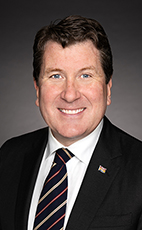
Biographical Information
- Elected as MP for New Brunswick Southwest in 2011, he was then defeated in 2015 and re-elected in 2019, 2021 and 2025.
- Currently also serves as a Member of the Liaison Committee and Chair of the Subcommittee on Agenda and Procedure of the Standing Committee on Public Accounts
- Previously served on many committees, including PACP for a brief time in 2013
- Prior to his election, M. Williamson occupied different positions. He was an editorial writer for the National Post from 1998 to 2001, then joined the Canadian Taxpayers Federation until 2008. In 2009, he was hired by Stephen Harper as director of communications in the PMO.
- Interest in the TBS portfolio:
- OAG Performance audits
- Integrity of the Public Service
- Transparency & Accountability
Jean Yip (Scarborough—Agincourt), 1st Vice-Chair, Liberal

Biographical Information
- Elected as MP for Scarborough—Agincourt in a by-election on December 11, 2017, and re-elected in 2019, 2021 and 2025.
- Has served on Public Accounts (since 2018), as well as Government Operations and Canada-China committees in the past.
- Also serves on the Special Committee on the Canada – People's Republic of China Relationship and as Vice-Chair of the Subcommittee on Agenda and Procedure of the Standing Committee on Public Accounts
- Before her election, Ms. Yip was an insurance underwriter and constituency assistant.
- Interest in the TBS portfolio:
- GBA+ and gender and diversity considerations in the Public Accounts;
- Environmental, Social, and Governance reporting.
Sébastien Lemire (Abitibi—Témiscamingue, QC), 2nd Vice-Chair, Bloc Québécois

Biographical Information
- Elected as the Member of Parliament in 2019 for Abitibi—Témiscamingue, re-elected in 2021 and 2025
- BQ critic for Public Accounts, Sport and Indigenous Relations and Northern Development.
- Previously served on Indigenous and Northern Affairs and Industry and Technology
- Before politics, he worked at the Fédération de l'UPA d'Abitibi-Témiscamingue, the Juripop Legal Clinic, Octane stratégies, and the Forum jeunesse de l'Île de Montréal of the Conférence régionale des élus de Montréal.
- Interest in the TBS portfolio:
- OAG Performance audits
- Government Accountability
Gérard Deltell (Louis-Saint-Laurent—Akiawenhrahk, QC), Member, Conservative

Biographical Information
- Elected as the Member of Parliament in 2015 for Louis-Saint-Laurent, re-elected in 2019, 2021 and 2025.
- Previously served on many committees, including Public Accounts
- Was leader of the Action démocratique du Québec from 2009 to 2012.
- Prior to his election, he was a journalist with TVA, Radio-Canada and TQS.
- Interest in the TBS portfolio:
- Professional Service Contracts
Ned Kuruc (Hamilton East—Stoney Creek, ON), Member, Conservative

Biographical Information
- Elected as the Member of Parliament in 2025 for Hamilton East—Stoney Creek.
- Prior to his election, he was an entrepreneur and was Director of Events and Fighter Acquisitions at K-1 Global
- Interest in the TBS portfolio:
- Professional Service Contracts
- Government Accountability
Stephanie Kusie (Calgary Midnapore, AB), Member, Conservative

Biographical Information
- Elected as the Member of Parliament in 2017 for Calgary Midnapore, re-elected in 2019 and 2021
- Conservative Shadow Minister for Treasury Board
- Previously sat on the Standing Committees of Official Languages, Procedure and House Affairs, and Transport
- Has a B.A in political science from the University of Calgary and an M.B.A. from Rutgers University
- Prior to her election, Ms. Kusie occupied multiple positions, including chargé d'affaires ad interim for Canada to El Salvador, consul for Canada to Dallas, Texas and senior policy advisor to Peter Kent in Latin America.
- Some of her duties before her time in office included negotiating free trade deals, work related to the Keystone Pipeline project, and lobbying the United Nations to place Canada on the Security Council.
- Interest in the TBS portfolio:
- Government Spending
- Government use of Professional Service Contracts
- Whistle Blowers / Disclosure of wrongdoing in the workplace
Kristina Tesser Derksen (Milton East—Halton Hills South, ON), Member, Liberal

Biographical Information
- Elected as the Member of Parliament in 2025 for Milton East—Halton Hills South.
- Attended the University of Toronto where she obtained a law degree.
- Prior to her election, she served two terms on the Milton Town Council
- Interest in the TBS portfolio:
- Professional Service Contracts and the Government's Legal Liability
Anthony Housefather (Mount Royal, QC), Member, Liberal

Biographical Information
- Elected as the Member of Parliament in 2015 for Mount Royal, re-elected in 2019, 2021 and 2025
- Previously served on many committees, including Justice and Human Rights, Government Operations and Access to Information, Privacy and Ethics
- Attended McGill University where he obtained two law degrees, he also has an MBA from Concordia University's John Molson School of Business
- Prior to his election, he served as Executive Vice President Corporate Affairs and General Counsel at a multinational technological company.
- He also served as mayor of Côte Saint-Luc between 2005 and 2015.
- Interest in the TBS portfolio:
- Professional Service Contracts and the Government's Legal Liability
Tom Osborne (Cape Spear, N.L.), Member, Liberal
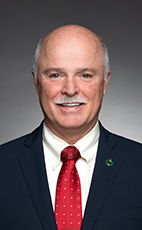
Biographical Information
- Elected as the Member of Parliament in 2025 for Cape Spear
- Attended Cabot College and Memorial University of Newfoundland
- Prior to his election, he was a member of the Newfoundland and Labrador House of Assembly from 1996 to 2024 where he held several cabinet posts including Minister of Finance and President of the Treasury Board
- Interest in the TBS portfolio:
- Professional Service Contracts
- Procurement Rules